


Spicy perfumes
Warm, vibrant, enveloping: spicy perfumes put spices at their heart. Saffron, cardamom, cinnamon and pepper, from sparkling pink pepper to woodier black pepper, light up alongside nutmeg and clove and rest on bases of patchouli, musk and vanilla. More a facet than a family of its own, spicy gives character to woody and amber perfumes, and reaches all the way to florals and gourmands: fresh enough for summer, warm and deep in autumn and winter. Here you will find spicy perfumes from the finest international niche brands.
The 10 best niche spicy perfumes
Our top 10: the most loved spicy perfumes in our boutique.
-
N. 1
 Born to Stand Out
Purple Stain
Woody spicy: saffron, cinnamon and nutmeg over caramel, vanilla and oud. €300,00 -
N. 2
 BDK Parfums
Gris Charnel Extrait
Spicy woody: cardamom, fig and black tea over iris, sandalwood and tonka bean. €280,00 -
N. 3
 Ramon Monegal
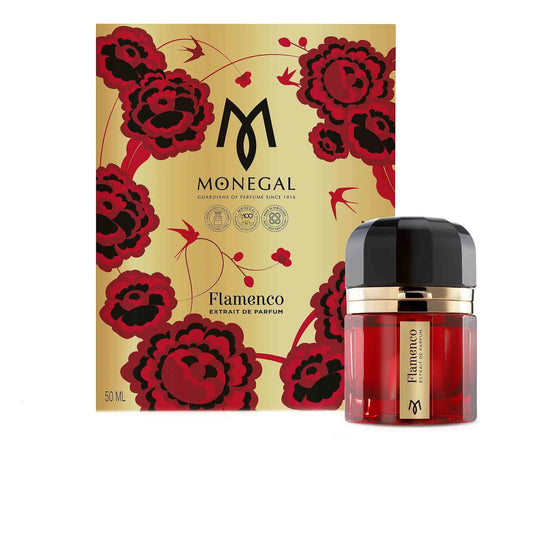
Flamenco Extrait de Parfum
Spicy amber: saffron, rose and raspberry over jasmine, oud, leather and amber. €275,00 -
N. 4
 Initio Parfums Privés
Oud For Greatness
Spicy woody: lavender, saffron and nutmeg over oud and patchouli. €320,00 -
N. 5
 Initio Parfums Privés
Side Effect
Spicy amber: rum and cinnamon over tobacco, saffron and vanilla. €280,00 -
N. 6
 Born to Stand Out
Drunk Lovers
Spicy woody: bergamot, Mexican juniper and red fruits over cognac, pepper and ginger, cardamom and cinnamon bark. €205,00 -
N. 7
 Superz. Budapest
Khamzat the Wolf
Leathery spicy: saffron, violet and raspberry over cardamom and cinnamon, leather and amber. €140,00 -
N. 8
 Thameen London
Carved Oud
Spicy woody: cardamom, cypriol and cypress over oud, cedarwood and patchouli, labdanum and sandalwood. €230,00 -
N. 9
 Initio Parfums Privés
Rehab
Spicy woody: bergamot and black pepper over lavender, cedarwood, patchouli and sandalwood. €290,00 -
N. 10
 Lorenzo Pazzaglia
Carbonara
Spicy amber: black pepper, pink pepper and elemi over jasmine, davana and rum, brown sugar and vanilla. €145,00


All spicy perfumes
39 of 135 perfumes with the selected filters.
39 of 135 products
-
DIVINE VANILLE
Vendor:Essential ParfumsRegular price From €24,00Regular priceUnit price for -
SIGNATURE POUR HOMME
Vendor:ZaharoffRegular price €175,00Regular priceUnit price for -
GRANDE ÎLE
Vendor:NissabaRegular price €160,00Regular priceUnit price for -
SIDE EFFECT
Vendor:Initio Parfums PrivésRegular price €280,00Regular priceUnit price for -
LEATHER EFFECTO
Vendor:Attar Al HasRegular price €285,00Regular priceUnit price for -
MEMENTO AUDERE SEMPER
Vendor:Les Folies du ParfumRegular price €250,00Regular priceUnit price for -
FLAMENCO EXTRAIT DE PARFUM
Vendor:Ramon MonegalRegular price €275,00Regular priceUnit price for -
APHRODISIAC TOUCH
Vendor:Unique'e LuxuryRegular price €259,00Regular priceUnit price for -
ÂME DU CŒUR
Vendor:Liquides ImaginairesRegular price €210,00Regular priceUnit price for -
AMBRE SAFRANO
Vendor:BDK ParfumsRegular price €225,00Regular priceUnit price for -
FAMILIAR STRANGERS
Vendor:GhawaliRegular price €200,00Regular priceUnit price for -
 Sold out
DUBAI RIMAL
Vendor:The Spirit of DubaiRegular price €255,00Regular priceUnit price for -
303 MARBRE ROUGE
Vendor:Bon ParfumeurRegular price €175,00Regular priceUnit price for -
DESERT ROSEWOOD
Vendor:Goldfield & BanksRegular price €180,00Regular priceUnit price for -
SUGARDADDY
Vendor:FugazziRegular price €145,00Regular priceUnit price for




A guide to spicy perfumes
What is a spicy perfume?
A spicy perfume puts spices at its heart: saffron, cardamom, cinnamon, pepper, ginger, nutmeg, clove. There are warm spices, such as cinnamon, clove, nutmeg and saffron, and fresh spices, such as pink pepper, ginger and cardamom. In the classifications, spicy is more a facet than a family of its own: perfumers speak of “spicy amber” and “woody spicy”, and warm spices feel most at home in the amber family, once known as oriental. That is precisely its strength: it enriches the other families and gives them warmth and character.
Most spice essential oils are obtained by distillation, with steam or water: this is how cinnamon bark, cardamom, clove and pepper oils are made. For some spices CO2 extraction is also used, and for saffron there are the absolute and the CO2 extract. Eugenol is the typical molecule of clove; cinnamaldehyde, typical of cinnamon, is also produced by synthesis.
Essential oil, CO2 extract or molecule?
A spice can reach the bottle in three different ways.
The essential oil
The classic route
- What it isThe essence of the spice, which holds its scent
- How it is madeBy distillation, with steam or water, of seeds, berries, buds or bark
- For exampleClove: about 6 kg of dried buds yield 1 kg of oil
The CO2 extract
Another natural extraction
- What it isA natural extract of the spice, obtained without distillation
- How it is madeWith carbon dioxide in its supercritical state
- For examplePink pepper, black pepper and ginger
The molecule
A single substance
- What it isA single molecule that carries the character of a spice
- How it is madeBy synthesis: this is also how cinnamaldehyde, the typical molecule of cinnamon, is produced
- For exampleGivaudan's Safraleine, warm and powerful, reminiscent of natural saffron with leather and tobacco facets; safranal
This is why “saffron” or “pepper” in a list of notes may mean an essential oil, an extract or the perfumer's interpretation: either way, it is their character that gives the perfume its signature.
From the spice routes to Spicebomb
For centuries spices set the world in motion: cinnamon and cassia were already reaching the Middle East at least 4,000 years ago. Then modern perfumery made them the stars, from spicy florals to the great ambers. The main milestones:
- 1501The Portuguese fleet of Pedro Álvares Cabral returns from India laden with spices along the Cape of Good Hope route, opened by Vasco da Gama in 1498.
- 1602The Dutch East India Company is founded, after the fleets of 1595 and 1598 had returned laden with cloves, mace, nutmeg and black pepper.
- 1843The first nutmeg seeds reach Grenada from the Banda Islands: the island will become the “Isle of Spice”, among the world's leading producers, and will carry the nutmeg on its flag.
- 1937Early American Old Spice by Shulton, commissioned by William Lightfoot Schultz: a women's fragrance with a spicy character.
- 1948L'Air du Temps by Nina Ricci, created by Francis Fabron: a spicy floral built on an accord of pink carnation and clove. The house presents it as the first spicy floral in history.
- 1953Youth-Dew by Estée Lauder is born as a bath oil and then worn as a perfume: the house classifies it as spicy amber and describes it with opulent flowers, rich spices and precious woods.
- 1965Habit Rouge by Guerlain, created by Jean-Paul Guerlain: the house presents it as the first oriental for men in history, the family we now call amber.
- 1977Opium by Yves Saint Laurent is launched with the China-inspired Autumn-Winter 1977 collection: a warm perfume with spicy notes.
- 1990Chanel launches Égoïste, created by Jacques Polge.
- 2008Studying Shiraz wine, a team of researchers recognises rotundone as the compound behind the aroma of pepper, present in far greater amounts in black and white peppercorns.
- 2012Spicebomb by Viktor&Rolf, created by Olivier Polge: a woody spicy fragrance with pink pepper, cinnamon, saffron and paprika.
Today niche perfumery takes spices in every direction: fresh, floral, woody, amber and gourmand.
The raw materials of spicy perfumes
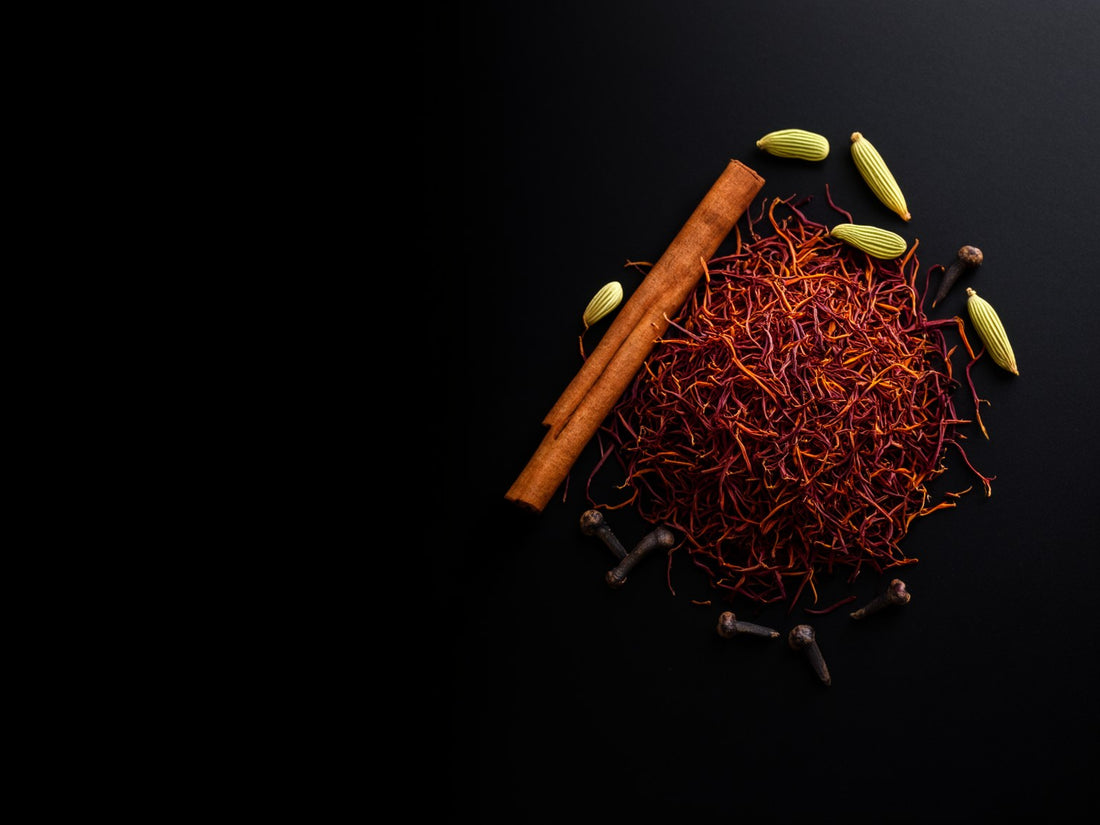
Saffron
Crocus sativus · Iran and Spain
Saffron is the flower's stigmas, picked by hand: it takes about 150,000 flowers to make a single kilo of saffron. Among its molecules, safranal stands out: it forms from picrocrocin, the spice's bitter molecule, and is the most abundant component of its volatile fraction. In perfumery saffron comes as an absolute or a CO2 extract, alongside molecules such as safranal and Safraleine.
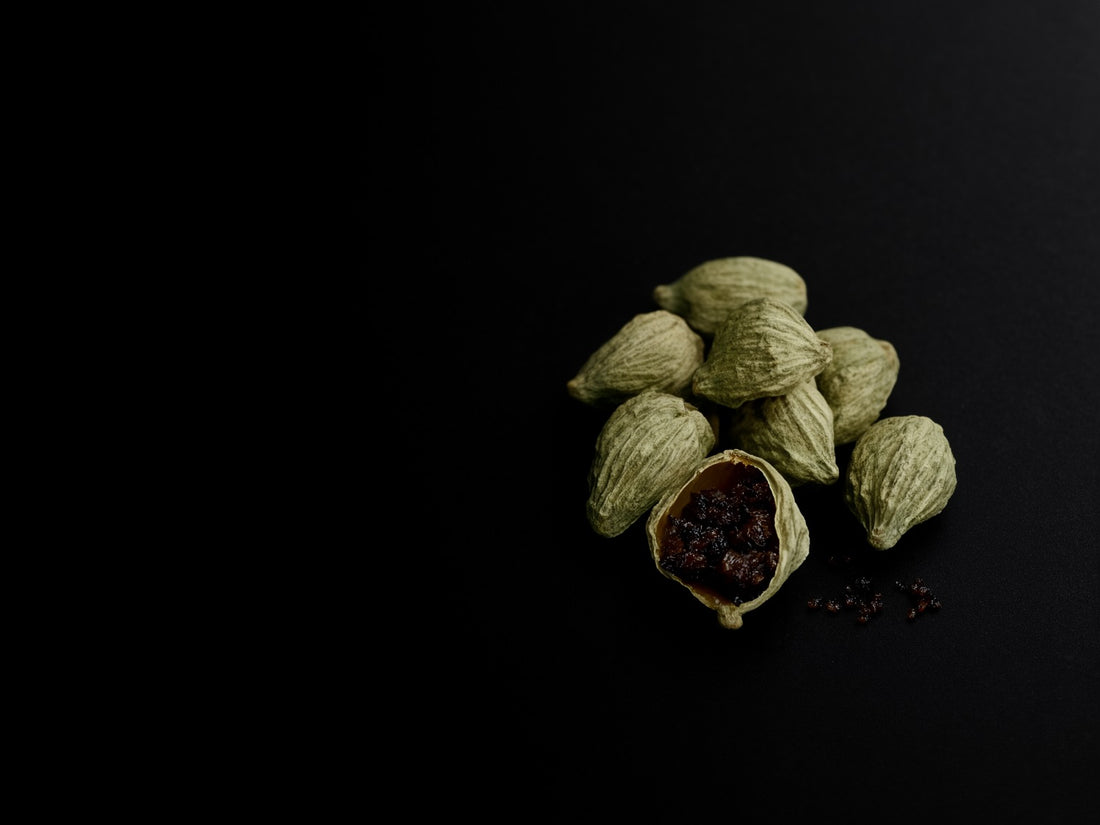
Cardamom
Elettaria cardamomum · Guatemala
The seeds are used, enclosed in small pods that are picked by hand. Guatemala, where it arrived in the early 20th century, is today one of the world's leading producers and supplies much of the international market. The main components of its oil are α-terpinyl acetate and 1,8-cineole.
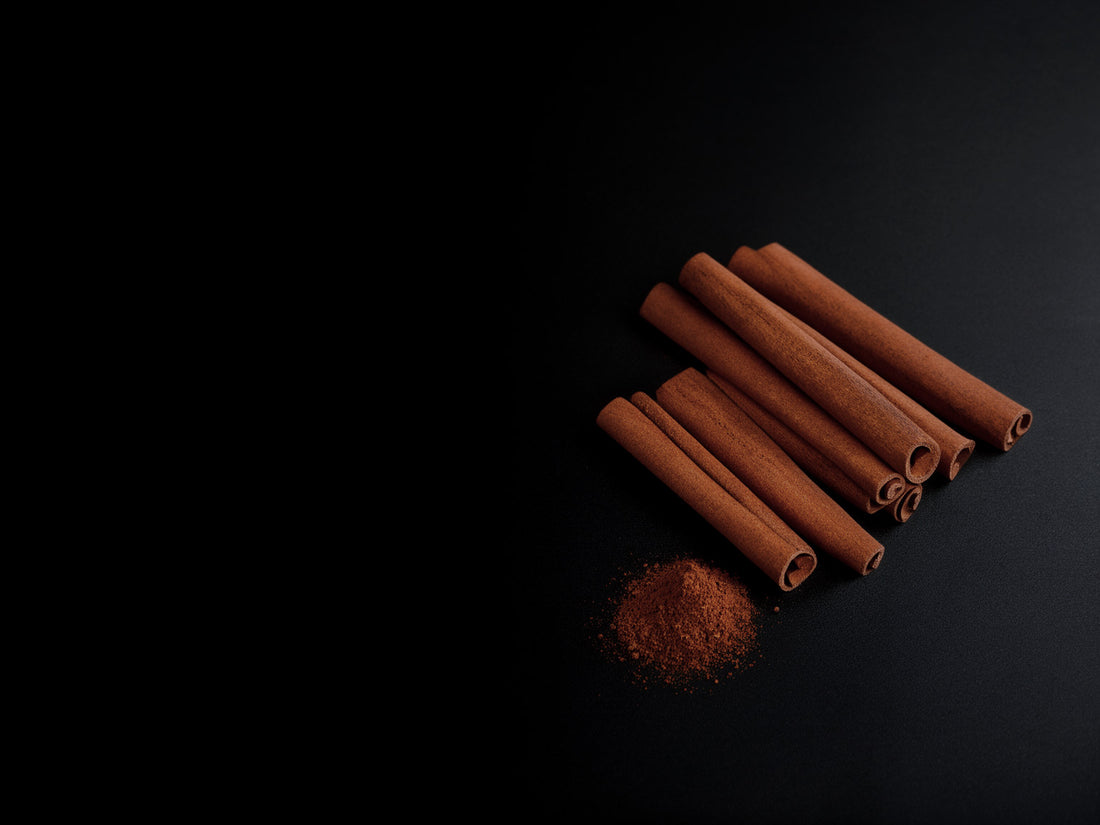
Cinnamon
Cinnamomum zeylanicum · Sri Lanka
With true Sri Lankan cinnamon, it is not only the bark, dominated by cinnamaldehyde, that is distilled: the leaves also give a steam-distilled essential oil whose main component is eugenol, the same molecule as clove. In the last decades of the 18th century the Dutch of the East India Company began growing it on plantations; before that, true cinnamon was gathered in the wild forests by the peelers of the Salagama community.
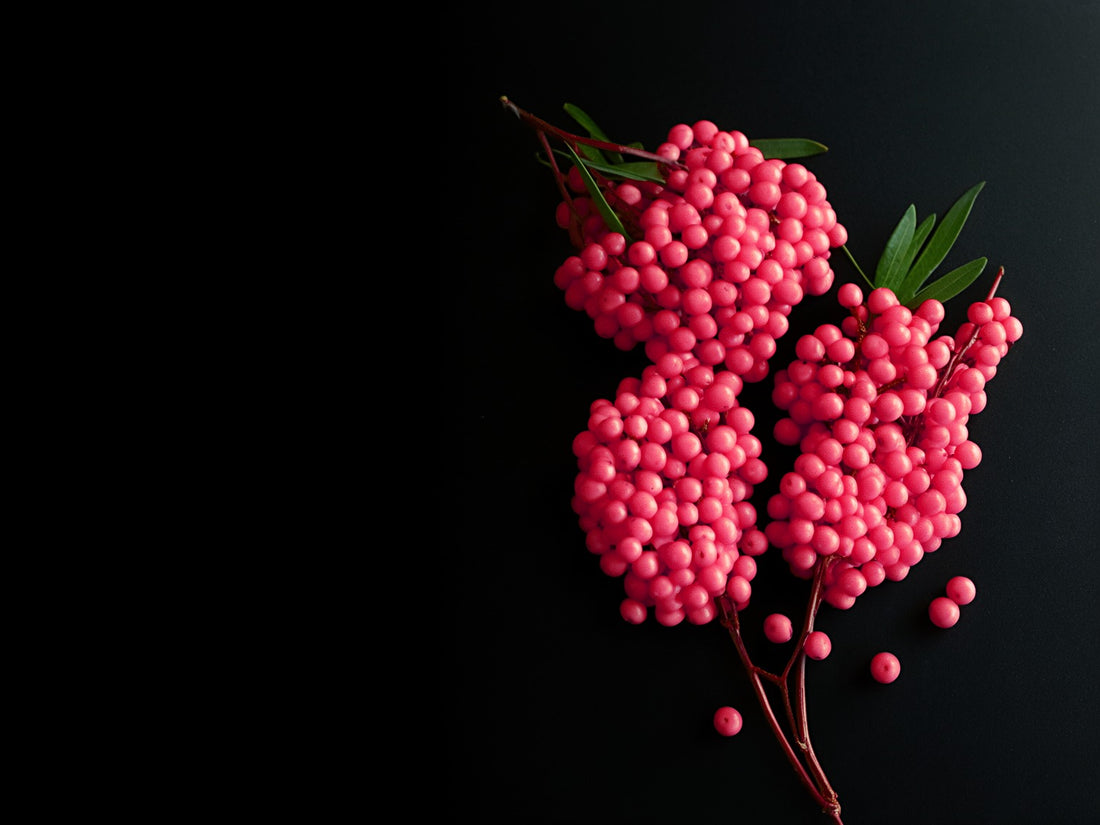
Pink pepper
Schinus terebinthifolia · Brazil, Madagascar and Réunion
Despite its name, it is not a true pepper: it belongs to the same botanical family as the cashew. The dried berries are distilled into an essential oil and also give a CO2 extract, even richer and fuller.
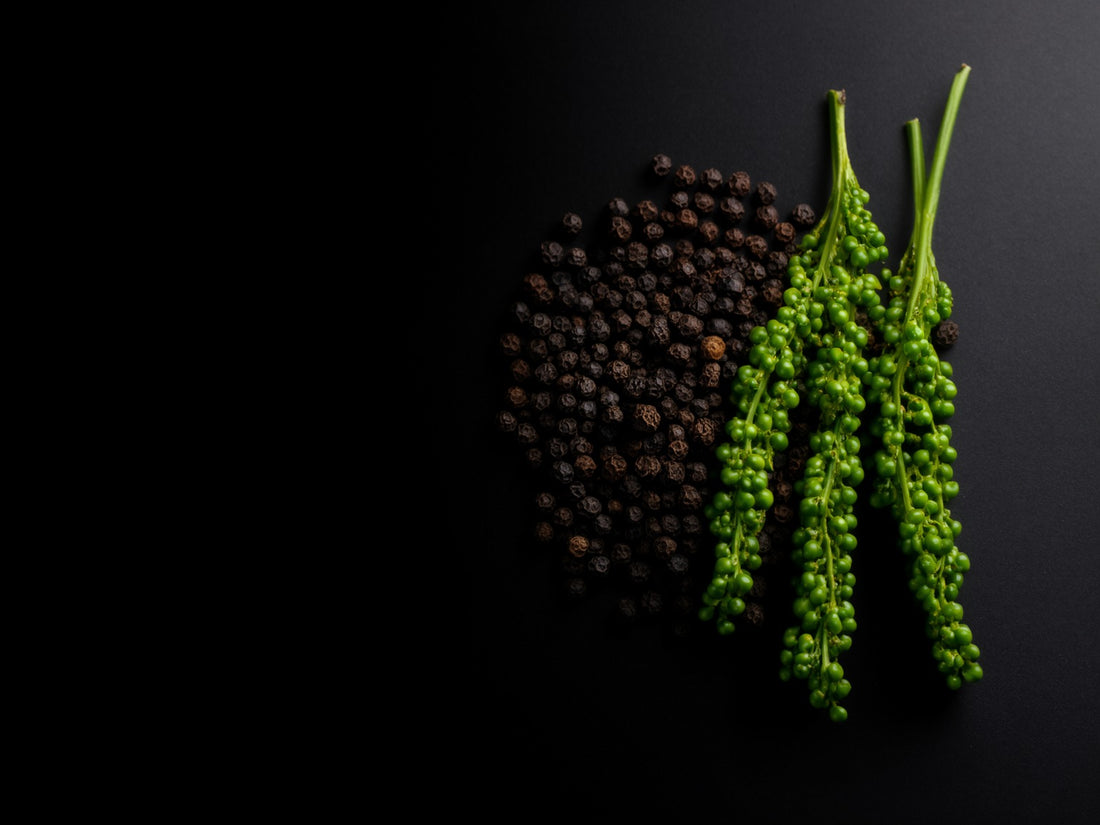
Black pepper
Piper nigrum · Malabar Coast, India
It is native to the Malabar Coast of India, but today the world's leading producer is Vietnam. Black, white and green pepper come from the same plant: black pepper is made by sun-drying fruits picked as they begin to turn red, which turn dark, white pepper by removing the dark outer layer. The bite of piperine does not pass into the essential oil, which keeps only the aroma.
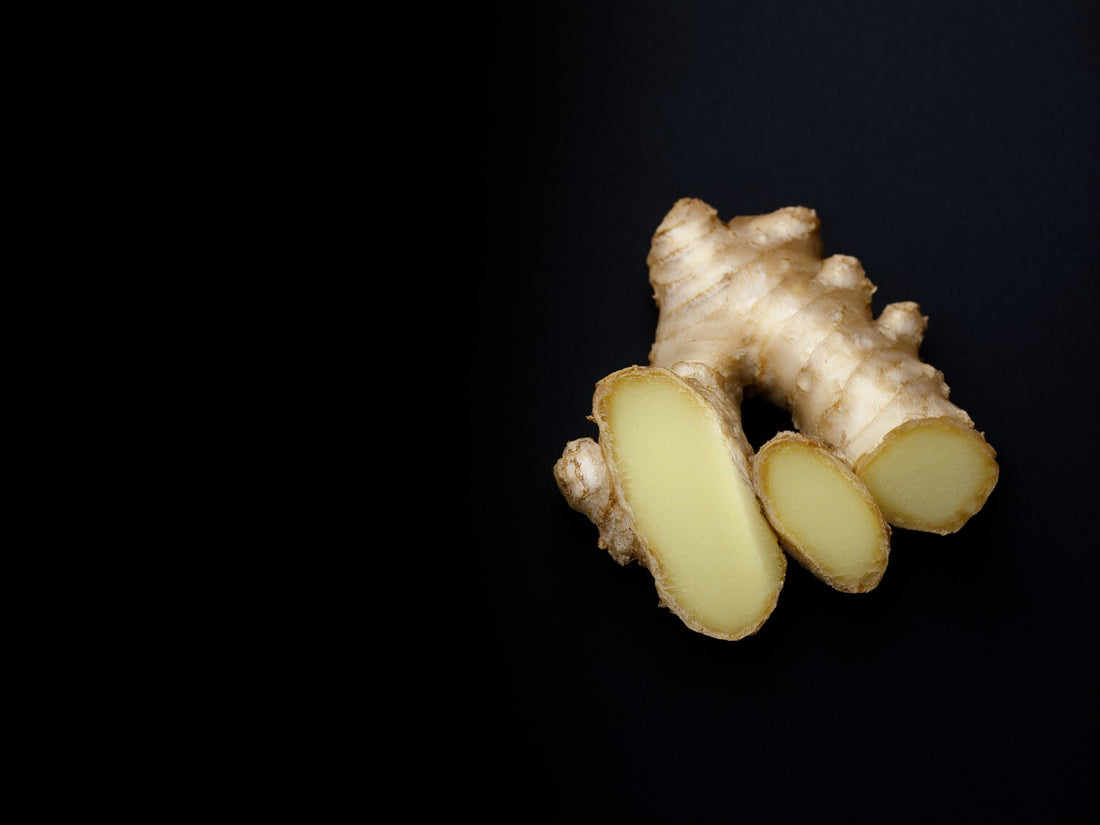
Ginger
Zingiber officinale · China, India and Madagascar
The rhizome, the plant's underground stem, is used, and gives an essential oil whose main component is zingiberene. In Madagascar the fresh rhizomes are distilled right after harvest, for an oil with lemony notes.
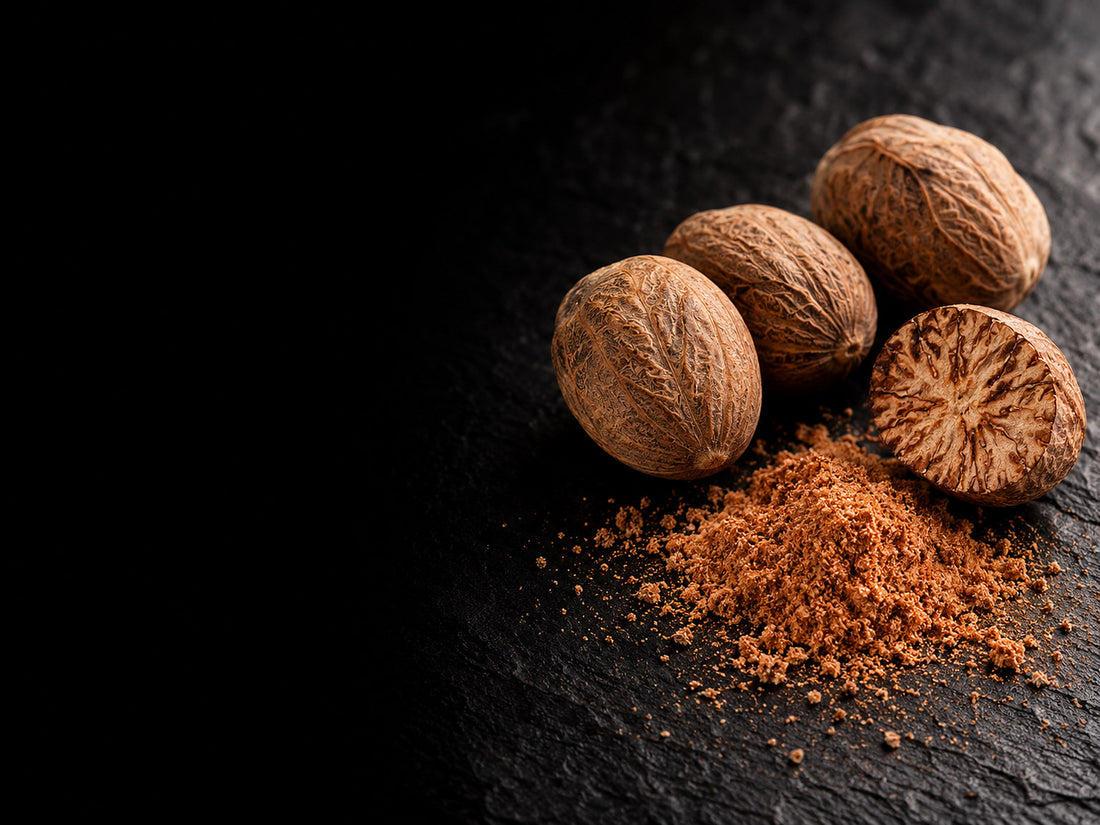
Nutmeg
Myristica fragrans · Moluccas
The same fruit gives two spices: nutmeg, which is the seed, and mace, the red net that wraps it. The Banda Islands, the historic heart of its trade, came under Dutch control, and under the Treaty of Breda of 1667 the Dutch kept the tiny island of Run and left Manhattan to the English. In 1843 the first seeds reached Grenada, which nutmeg turned into the “Isle of Spice” and which carries it on its flag.

Clove
Syzygium aromaticum · Moluccas and Madagascar
Cloves are the flower buds, picked by hand just before they open and dried in the sun. Their signature molecule is eugenol, which can exceed 80% of the oil: the same molecule that dominates in spicy-scented carnations, which is why the spice and the flower smell alike.

Frankincense
Boswellia spp. · Horn of Africa
The resin that seeps from cuts in the Boswellia trunk has a peppery, citrusy character, which is why it feels at home in spicy perfumes. In 2016 chemists from the CNRS in Nice and the University of Turin discovered olibanic acids, molecules never before seen in nature that give frankincense its “old church” note: from 3 kg of essential oil they isolated about one milligram. Each species has its own signature: the oil of Boswellia papyrifera, from the Horn of Africa, is dominated by octyl acetate.
The nuances of spicy perfumes
The spicy facet runs through the families: it can be fresh and bright or warm and enveloping. From the freshest spices to the warmest, here are its main faces:
← FreshWarm →
Fresh spicy
Ginger, white pepper and green cardamom: the brightest spices, which lend lift to fresh and woody compositions.
Floral spicy
Carnation, rose and spices, with pink pepper and saffron: the flower gains warmth and depth.
Woody spicy
Black pepper meets cedar, vetiver, patchouli and frankincense: the driest, most elegant side of the spicy facet.
Spicy gourmand
Sweet cinnamon and spiced tonka: spices turn gourmand and enveloping.
Spicy amber
Warm spices rest on amber and resins: the warmest, most sensual face of the spicy facet.
In our collection the most frequent second families are woody and amber: to explore every nuance, use the fragrance family or note filters.
When to wear a spicy perfume
Warm spicy perfumes, with cinnamon, clove, nutmeg and saffron, are the scents of autumn and winter and are at their best in the evening. Fresh spicy perfumes, with pink pepper, ginger and cardamom, are perfect in summer and by day too.
Longevity depends above all on the base the spices rest on: woods, resins, musks and gourmand notes give the perfume body and staying power. In our collection of spicy perfumes the most frequent base notes are patchouli, musk and vanilla; the spices most often found in the opening are saffron, cardamom and pink pepper.
Frequently asked questions
What does “spicy perfume” mean?
It is a perfume in which spices take centre stage, such as saffron, cardamom, cinnamon, pepper, ginger, nutmeg and clove. Rather than a family of its own, spicy is a facet that enriches the other families, above all amber and woody.
What is the difference between spicy and amber (or oriental)?
“Amber” is the name now used for the family once called “oriental”: warm perfumes of amber and resins. Spicy, instead, is a facet: when warm spices rest on an amber base we speak of spicy amber, and when they meet woods, of woody spicy.
Are spicy perfumes for men?
Not only. Over its history, spicy has shaped great classics for both women and men, as the timeline above shows, and today many niche spicy perfumes are made for everyone. The best way to choose is to try them on your skin.
Are there fresh spicy perfumes for summer?
Yes. Pink pepper, ginger and cardamom are fresh spices: they bring brightness and lift, and spicy perfumes built on them are perfect in hot weather and by day too.
Are spicy perfumes long-lasting?
It depends above all on the base the spices rest on. Many niche spicy perfumes rest on rich, enveloping bases: in our collection the most frequent are patchouli, musk and vanilla.
Can I try a spicy perfume before buying it?
Yes. With every order over €100 you receive 10 free samples, and you choose 5 of them yourself: it is the easiest way to discover a spicy perfume on your skin before buying the bottle. If you are near Rome, you can try them in person at our boutique in Nettuno.
Found your spicy perfume?
Choose from the 135 spicy perfumes in our boutique, signed by the finest international niche houses.
- 10 free samples with every order over €100, you choose 5 of them
- Free shipping in Italy on orders over €60
- Boutique in Nettuno, near Rome, to try them in person
Explore the other fragrance families
-
 Floral perfumes233 perfumes
-
 Fruity perfumes137 perfumes
-
 Citrus perfumes73 perfumes
-
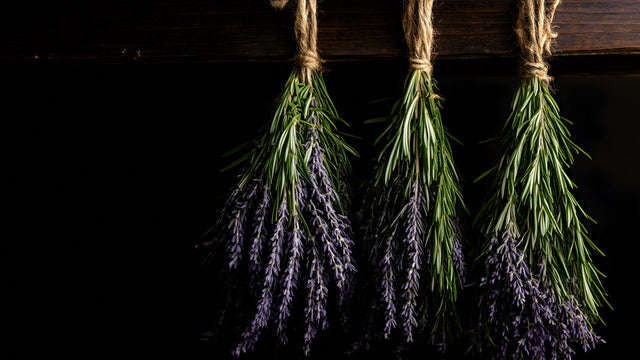 Aromatic perfumes76 perfumes
-
 Woody perfumes222 perfumes
-
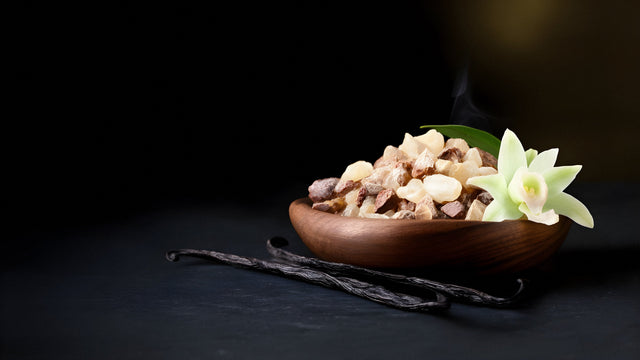 Amber perfumes211 perfumes
-
 Gourmand perfumes135 perfumes
-
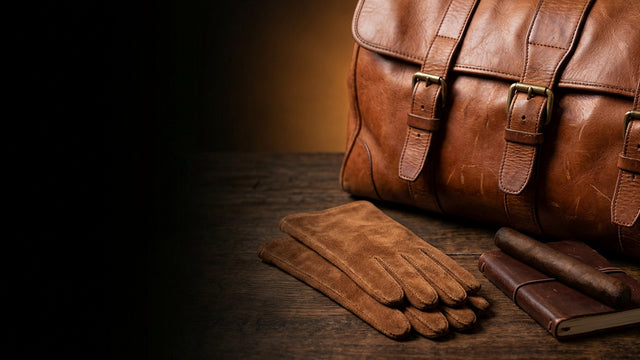 Leather perfumes38 perfumes
-
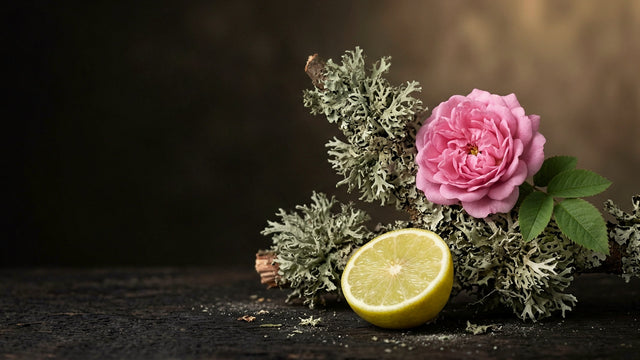 Chypre perfumes9 perfumes
-
 Aquatic perfumes38 perfumes
-
 Musky perfumes36 perfumes
-
 Powdery and talc-like perfumes17 perfumes


