


Leather perfumes
Smoky, velvety, enveloping. Leather perfumes recreate the scent of tanned hide with a precious accord of birch tar, labdanum, saffron, tobacco, iris and oud. They can be as soft as suede or as dark and smoky as the legendary Russia leather, the hide treated with birch oil. Leather is a base note: it leaves a long, tenacious trail, perfect for autumn, winter and the evening, and it wins over men and women alike. Here you will find leather perfumes from the finest international niche brands.
The 10 best niche leather perfumes
Our top 10: the most loved leather perfumes in our boutique.
-
N. 1
 The Spirit of Dubai
Dubai Meydan
Leather amber: grapefruit, lavender and saffron over tobacco, jasmine and oud, leather, patchouli and vanilla. €255,00 -
N. 2
 Kajal
Lamar Noir
Woody leather: bergamot, green apple and violet over balsamic accord, vanilla and caramel, leather, oud and guaiac wood. €240,00 -
N. 3
 Thameen London
Regent Leather
Spicy leather: Sicilian lemon over jasmine, saffron and cardamom, musk, patchouli and leather. €270,00 -
N. 4
 Jupilò
Cuorio
Amber leather: lily of the valley, amber and leather over tonka bean and raspberry, vanilla, sweet notes and musk. €185,00 -
N. 5
 Nobile 1942
Rudis
Leather woody: dried fruit, bergamot and red wine over saffron, rose and cedarwood, leather, incense and vetiver. €230,00 -
N. 6
 Born to Stand Out
Black Crème
Leather amber: milk, candle and iris over oud, leather and vanilla, caramel, sandalwood and amber. €300,00 -
N. 7
 Devertere
Suedexcess
Woody leather: bergamot, artemisia and saffron over tonka bean, birch tar and iris, sandalwood, suede and oud. €120,00 -
N. 8
 Superz. Budapest
Khamzat the Wolf
Leather spicy: saffron, violet and raspberry over cardamom, cinnamon and white flowers, leather, amber and musk. €140,00 -
N. 9
 Habibi New York
White Moroccan Leather
Woody leather: citrus and nutmeg over incense and sandalwood, leather and patchouli. €150,00 -
N. 10
 Goldfield & Banks
Purple Suede
Floral leather: pink pepper and bergamot over Tasmanian lavender, rose and coriander seeds, Indonesian patchouli, woody leather accord and Australian tropical agarwood. €238,00


All leather perfumes
38 perfumes to filter by family, notes and brand.
38 products
-
WHITE MOROCCAN LEATHER
Vendor:Habibi New YorkRegular price €150,00Regular priceUnit price for -
LAMAR NOIR
Vendor:KajalRegular price €240,00Regular priceUnit price for -
GIOCO ALL'ALBA
Vendor:Bois 1920Regular price From €125,00Regular priceUnit price for -
CUOIO ETRUSCO LUXURY PERFUME
Vendor:Teatro FragranzeRegular price €120,00Regular priceUnit price for -
OUD SHAMAYEL
Vendor:Al AmbraRegular price €80,00Regular priceUnit price for -
SUEDEXCESS
Vendor:DevertereRegular price €120,00Regular priceUnit price for -

 Sold out
BLACK CRÈME
Vendor:Born to Stand OutRegular price €300,00Regular priceUnit price for -
BUVEUR DE VENT
Vendor:Liquides ImaginairesRegular price €210,00Regular priceUnit price for -
CRÈME DE CUIR
Vendor:BDK ParfumsRegular price €225,00Regular priceUnit price for -
DUBAI MEYDAN
Vendor:The Spirit of DubaiRegular price €255,00Regular priceUnit price for -
NEW LEATHER
Vendor:New NotesRegular price €160,00Regular priceUnit price for -
KHAMZAT THE WOLF
Vendor:Superz. BudapestRegular price €140,00Regular priceUnit price for -
603 CUIR SAHIB
Vendor:Bon ParfumeurRegular price €175,00Regular priceUnit price for


A guide to leather perfumes
What is a leather perfume?
A leather perfume is one that recreates the scent of leather: dry, smoky, tobacco-like notes that evoke tanned hide, burnt wood and tar. It is one of perfumery's historic families: the Société Française des Parfumeurs included it in its very first classification, in 1984, alongside florals, chypres, fougères and ambers, and still keeps it today among its seven families.
There is no essential oil of hide: in perfumery leather is an accord, built by the perfumer from different materials. Rectified birch tar brings the dry, smoky facet, cade the smoke, styrax a balsamic warmth and labdanum the amber, resinous side; isobutyl quinoline, which Givaudan describes as powerful, with an intense leathery character, gives a deep leather, and saffron makes it spicy. Leather is a base note: it gives a perfume staying power and sillage.
Smoky, suede or animalic?
Leather in perfumery has three classic faces.
Russia leather
The smoky leather
- What it isA dry, smoky leather inspired by Russia leather, the hide treated with birch oil after tanning, which gave it an unmistakable scent and made it water-resistant
- How it is madeWith rectified birch tar, together with cade and burnt-wood notes
- For exampleCuir de Russie by Chanel, created by Ernest Beaux in 1927
Suede
The soft leather
- What it isA soft, powdery, refined leather that recalls the caress of suede
- How it is madeWith bases that give a leather and suede effect
- For exampleDaim Blond by Serge Lutens, created by Christopher Sheldrake in 2004: a suede with apricot
Animalic leather
Castoreum leather
- What it isA warm, smoky leather historically linked to castoreum, a secretion from the beaver's castor sacs, used in perfumery precisely for its leather-like note
- How it is madeToday with reconstructions made of synthetic molecules and plant materials, with no animal ingredients
- For exampleThe castoreum bases made by the major fragrance suppliers, which recreate its character with no animal ingredients
Alongside them sits the leather chypre, straddling two families: Robert Piguet classifies its Bandit as a “Leather Green Chypre”.
From the glovers of Grasse to Russia leather: the story of leather perfumes
Long before it became a fragrance family, leather was for centuries the perfumers' companion. The main milestones:
- Middle AgesGrasse is a town of tanners, specialising in the tanning of hides.
- RenaissanceHides are perfumed: Peau d'Espagne, “Spanish skin”, scented with precious essences, spreads, and scented gloves come into fashion, masking the smell of tanned leather.
- 1614Louis XIII recognises the guild of the Maîtres Gantiers Parfumeurs, the master glover-perfumers.
- From the 17th centuryRussia leather, tanned and then treated with birch oil, becomes a prized hide for upholstery and footwear: its unmistakable scent will carry it all the way into perfumery.
- 1724In Grasse the glover-perfumers separate from the tanners' guild.
- 1919Tabac Blond by Caron, created by Ernest Daltroff: despite its name, an accord of leather and carnation, which the house describes as both masculine and feminine.
- Mid-1920sKnize Ten, from the Viennese house of Knize: a classic leather perfume.
- 1927Cuir de Russie by Chanel, created by Ernest Beaux: the name pays tribute to the birch tar Russian soldiers used to waterproof their boots.
- 1944Bandit by Robert Piguet, created by Germaine Cellier: a green leather chypre.
- 1959Cabochard by Grès: another great leather classic.
- 1996 and 2004Serge Lutens and Christopher Sheldrake create Cuir Mauresque, a spicy, amber leather, and Daim Blond, a suede leather with apricot.
Today leather is built with controlled materials: the IFRA standard allows only rectified birch tar, with strict limits on polycyclic aromatic hydrocarbons, and castoreum is replaced by synthetic and plant-based reconstructions. So niche perfumery takes leather in every direction: suede, floral, amber, spicy, smoky.
The raw materials of leather perfumes
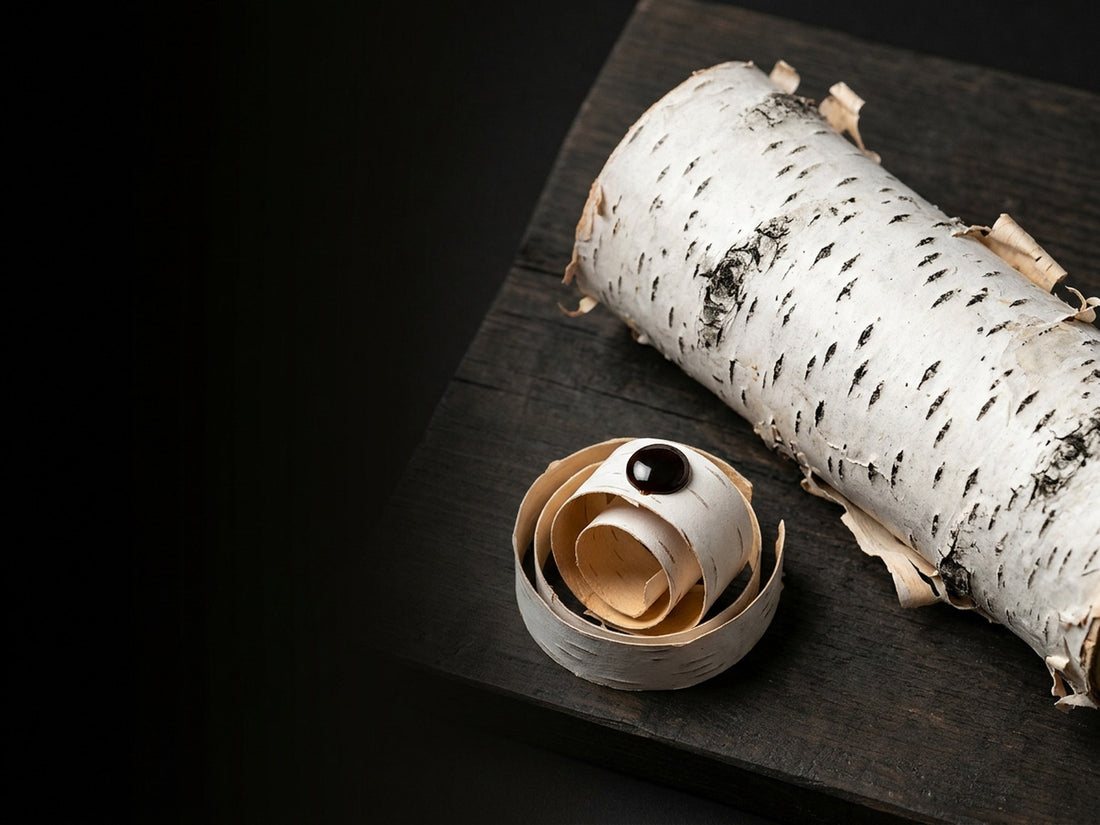
Birch tar
Betula pendula and Betula pubescens · bark and wood
It comes from the dry distillation of birch bark or wood, followed by rectification to purify it. It is the soul of Russia leather: hide treated with birch oil took on its characteristic scent and became water-resistant, and it was thought to keep insects away. Perfumery uses it to give a leathery, smoky note to leather perfumes and Cuir de Russie fragrances.
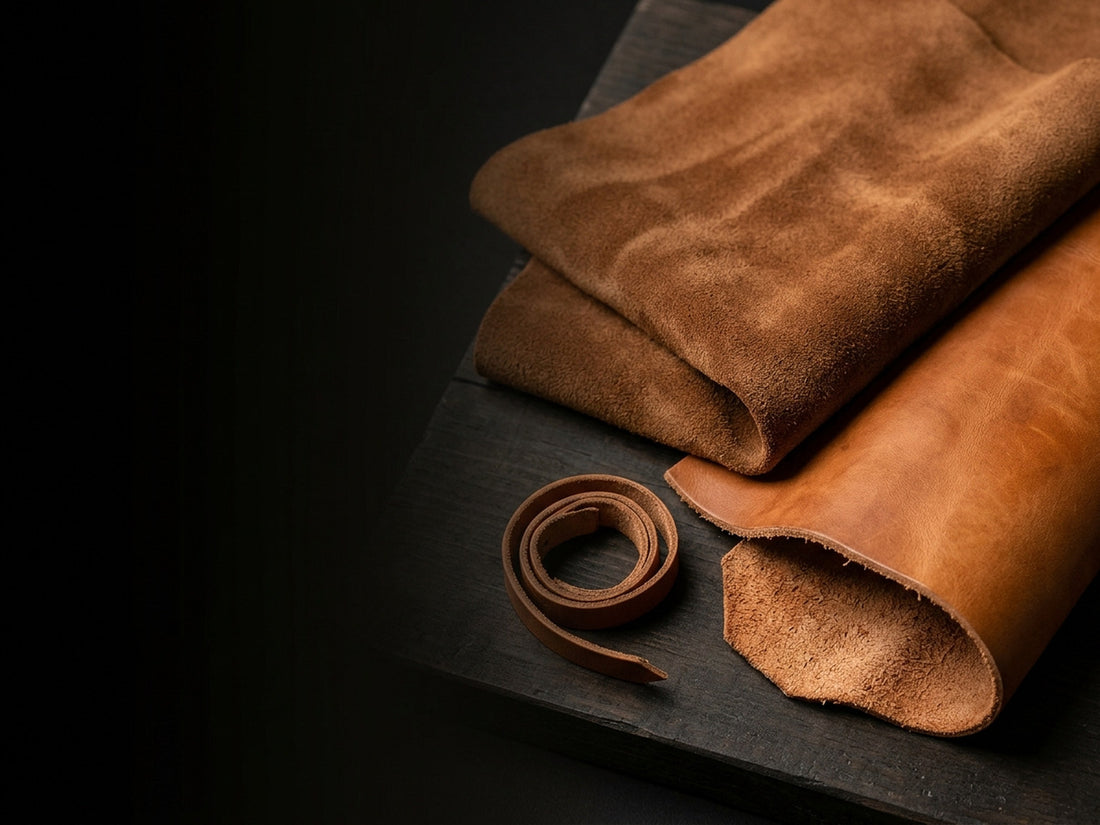
Leather and suede
Leather accord · isobutyl quinoline and suede bases
There is no essential oil of hide: leather is an accord. Its pillar is isobutyl quinoline, which Givaudan places in the “Leather - Moss” family and describes as powerful and intense, to be dosed from traces up to 2%. The house of De Laire made it into its Mousse de Saxe base, and the molecule became the foundation of the great leather perfumes of the 20th century. For a suede effect perfumers use dedicated bases.
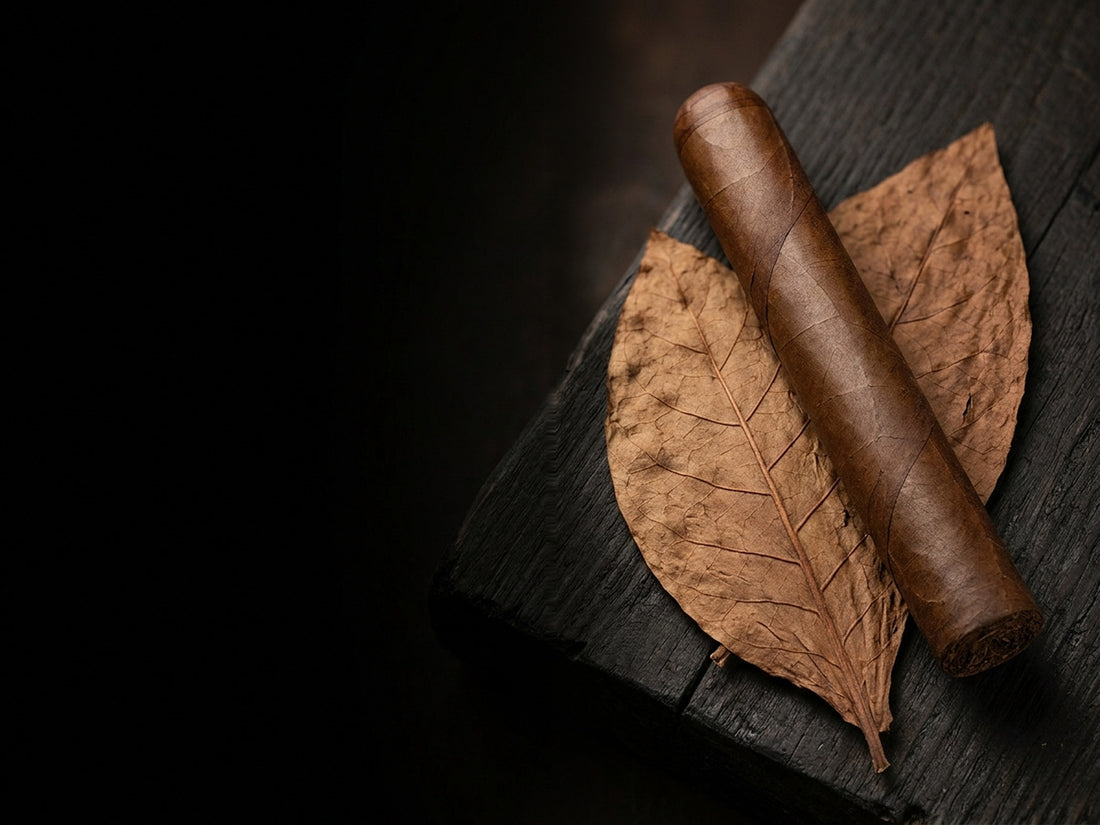
Tobacco
Nicotiana tabacum · West Africa
The plant is native to the Americas. For its absolute, Biolandes uses burley leaves picked in summer and air-dried in the shade: in ventilated barns the leaves cure for weeks, turning from green to yellow to brown. Biolandes describes it as a powerful, aromatic scent from the hay olfactory family, and lists it among the materials that pair well with leather accords.
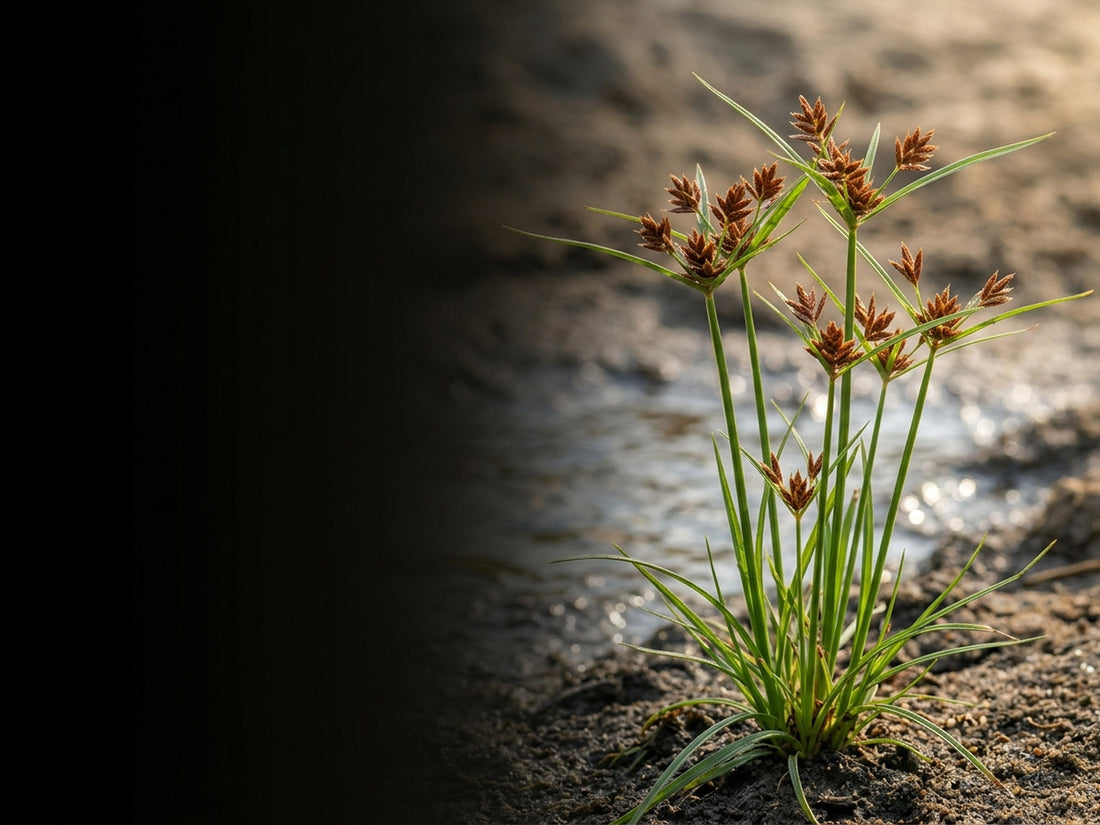
Cypriol
Cyperus scariosus · India
It is a sedge from which, in India, steam distillation of its underground parts yields an oil with a deep, woody, earthy and spicy scent.

Labdanum
Cistus ladanifer · Andalusia
It is the sticky gum exuded from the leaves and young stems of the rockrose. dsm-firmenich sources it from the Andévalo, in Andalusia: the plants are picked by hand between June and September and dipped in hot alkaline water, then extraction gives the resinoid and a second purification the absolute, and the cistus grows wild in wheat fields left fallow for two or three years. For dsm-firmenich labdanum has a leathery dry-down and is the key heart note of the chypre family.
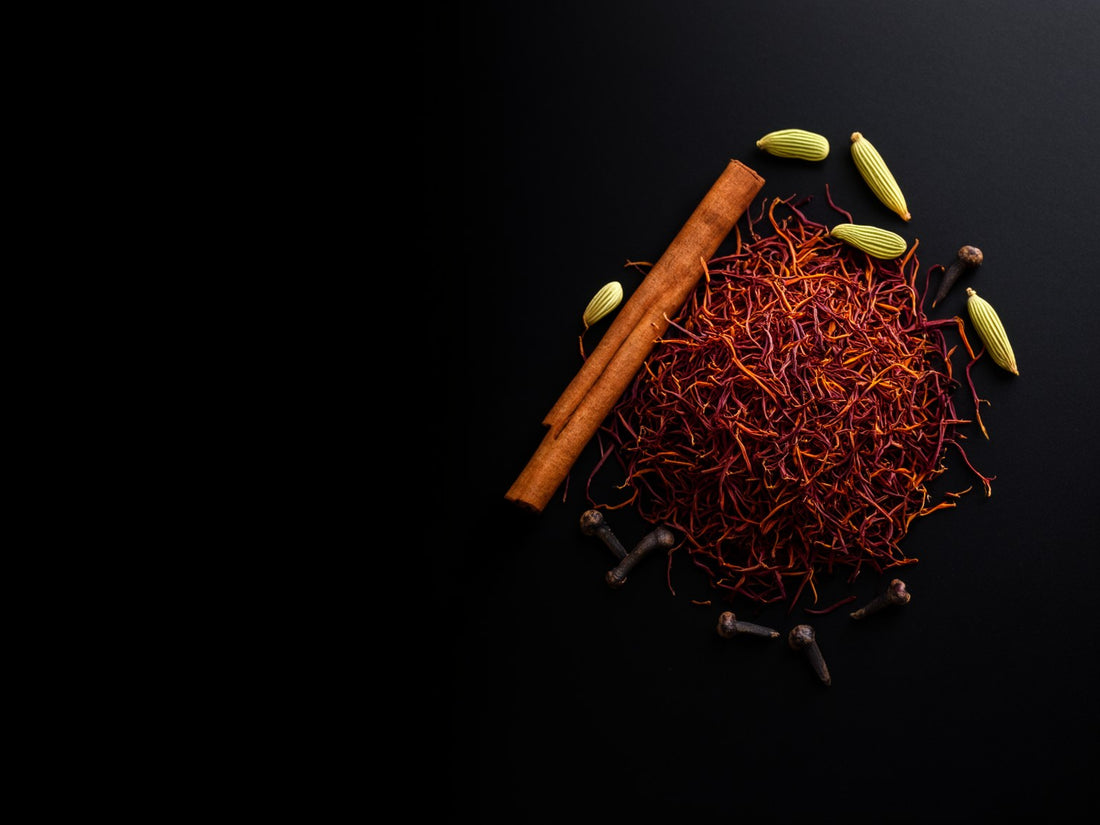
Saffron
Crocus sativus · Iran
It is the three red threads of the flower's stigma, picked by hand: it takes around 150,000 flowers to make one kilo, and Iran produces around 90% of it. Its scent is born during drying, when safranal forms. Its link with leather also runs through Safraleine, a Givaudan molecule, spicy, leathery and woody, with leather and tobacco facets that recall natural saffron.

Oud
Aquilaria spp. · South-East Asia
Agarwood forms when a wounded Aquilaria tree reacts to stress and fungal infection by producing a defensive resin: the wood turns from pale to dark, dense and saturated with resin. It is protected under CITES Appendix II. Its bond with leather is so close that dsm-firmenich created Leather Oud, a base inspired by natural oud, with leathery and animalic notes.

Iris
Iris pallida · Tuscany
In Tuscany it is grown among vines and olive trees. The scent lies in the rhizomes: they are cleaned, peeled, dried and left to mature for two or three years so that irones can form, then ground and steam distilled. The yield of orris butter is tiny, between 0.1 and 0.2%.
The nuances of leather perfumes
Leather can be a velvety caress or a dark, intense smoke. From the softest to the darkest, here are its main faces:
← SoftDark →
Suede leather
The softest face: a powdery, refined leather, like suede.
Floral leather
A heart of rose, violet or iris softens the hide: Chanel classifies its Cuir de Russie as “Amber – Leather – Floral”.
Amber leather
Labdanum and styrax wrap leather in resinous, balsamic warmth.
Spicy leather
Saffron, cumin and cinnamon set the hide alight: Cuir Mauresque by Serge Lutens, for example, pairs leather with cinnamon and cumin.
Tobacco leather
Tobacco is one of leather's natural facets: the great example is Tabac Blond, from 1919.
Woody leather
Leather meets dry woods: it is no accident that Michael Edwards' Fragrance Wheel places it among the Dry Woods.
Smoky leather
Birch and cade evoke the smoke of Russia leather: the darkest, most legendary face of the family.
In our collection the most frequent second families are woody and amber, followed by floral and spicy: to explore every nuance, use the fragrance family or note filters.
When to wear a leather perfume
Leather perfumes are the scents of autumn and winter, of evenings and cool days, when their warmth envelops and stays with you. Leather is one of the most unisex notes in perfumery, with a long history in both men's and women's fragrances: choose the nuance that suits you, from the softest suede to smoky leather.
Longevity is one of their great strengths. Leather is a tenacious base note that gives a perfume staying power and sillage: that is why a leather perfume is best enjoyed over time, as it unfolds on the skin. In our collection, alongside leather, musk, patchouli and vanilla recur often, together with saffron, oud and labdanum.
Frequently asked questions
What does a leather perfume smell like?
It recalls tanned leather, with dry, smoky, tobacco-like notes, sometimes of burnt wood and tar. It can be soft and powdery like suede or dark and smoky like Russia leather.
How is the leather note created in a perfume?
There is no essential oil of hide: leather is an accord. The perfumer builds it with rectified birch tar, cade, styrax, labdanum, saffron and molecules such as isobutyl quinoline, which gives an intense, long-lasting leather.
What is Russia leather?
It is leather that was treated with birch oil after tanning, which gave it a characteristic scent and made it water-resistant. Its dry, smoky scent inspired the “Cuir de Russie” leather perfumes, such as the one Ernest Beaux created for Chanel in 1927.
Are leather perfumes for men or for women?
They are for everyone: leather is one of the most unisex notes in perfumery. It has a long history in both men's and women's perfumery, and Caron describes its Tabac Blond, born in 1919, as an accord of leather and carnation, both masculine and feminine. The best way to choose is to try them on your skin.
Do leather perfumes last long?
Yes: leather is a tenacious base note that gives a perfume staying power and a noticeable trail. In our collection leather is often paired with other warm base notes, such as musk, patchouli, vanilla and oud.
Can I try a leather perfume before buying it?
Yes. With every order over €100 you receive 10 free samples, and you choose 5 of them yourself: it is the easiest way to discover a leather perfume on your skin before buying the bottle. If you are near Rome, you can try them in person at our boutique in Nettuno.
Found your leather perfume?
Choose from the 38 leather perfumes in our boutique, signed by the finest international niche houses.
- 10 free samples with every order over €100, you choose 5 of them
- Free shipping in Italy on orders over €60
- Boutique in Nettuno, near Rome, to try them in person
Explore the other fragrance families
-
 Floral perfumes233 perfumes
-
 Fruity perfumes137 perfumes
-
 Citrus perfumes73 perfumes
-
 Aromatic perfumes76 perfumes
-
 Woody perfumes222 perfumes
-
 Amber perfumes211 perfumes
-
 Gourmand perfumes135 perfumes
-
 Spicy perfumes135 perfumes
-
 Chypre perfumes9 perfumes
-
 Aquatic perfumes38 perfumes
-
 Musky perfumes36 perfumes
-
 Powdery and talc-like perfumes17 perfumes


