


Fruity perfumes
Juicy, radiant, velvety: fruity perfumes put fruit at their heart, citrus aside. Red berries, peach, pineapple, mango and fig, recreated through the perfumer's art, meet blackcurrant bud absolute, one of the rare natural fruity materials, and rest on bases of vanilla, musk and amber. They blend with florals in the brightest bouquets and with gourmands in the most indulgent creations, and they suit every season, from spring to winter. Here you will find fruity perfumes from the finest international niche brands.
The 10 best niche fruity perfumes
Our top 10: the most loved fruity perfumes in our boutique.
-
N. 1
 Stéphane Humbert Lucas
God of Fire
Woody fruity: mango, lemon and pink pepper over jasmine, oud and amber. €215,00 -
N. 2
 Kajal
Äican
Gourmand fruity: passion fruit, pineapple and mandarin over jasmine and ginger, praline and vanilla. €239,00 -
N. 3
 Kajal
Dahab Absolu
Floral fruity: mango, passion fruit and green apple over jasmine, rose and honey, caramel and vanilla. €240,00 -
N. 4
 Unique'e Luxury
Mangonifiscent
Floral fruity: mango and bergamot over rose, geranium and jasmine, honey and vanilla. €379,00 -
N. 5
 Ramon Monegal
Flamenco
Fruity floral: orange blossom, apple and raspberry over rose, iris and jasmine, cedarwood and amber. €195,00 -
N. 6
 New Notes
Akigala Mandarino
Woody fruity: mandarin, passion fruit and raspberry over freesia and jasmine, woody notes and amber notes. €160,00 -
N. 7
 Kajal
Lamar
Floral fruity: pineapple, red berries and apple over rose, magnolia and jasmine, vanilla and amber. €209,00 -
N. 8
 Stéphane Humbert Lucas
Pink Boa
Aromatic fruity: blackcurrant, bergamot and rosemary over raspberry and basil, patchouli and olibanum. €215,00 -
N. 9
 Lorenzo Pazzaglia
Evil Angel
Woody fruity: tropical fruits, absinthe and lime over rum, citron and sandalwood. €145,00 -
N. 10
 The Spirit of Dubai
Dubai Ajyal
Floral fruity: plum, pear and caramelized apple over osmanthus, jasmine sambac and rose loukoum, tonka bean and vanilla. €255,00


All fruity perfumes
137 perfumes to filter by family, notes and brand.
137 products
-
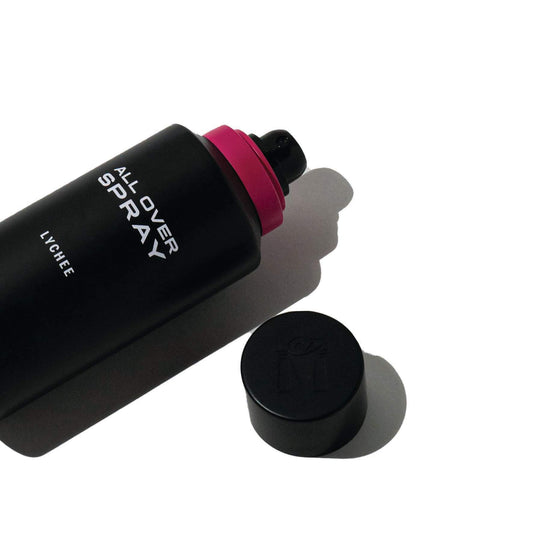
LYCHEE ALL OVER SPRAY
Vendor:Atyab Al MarshoudRegular price €59,00Regular priceUnit price for -
MARSHOUD 4 RED LONDON EDITION
Vendor:Atyab Al MarshoudRegular price €88,00Regular priceUnit price for -
TEEN SPIRIT
Vendor:Double DragonRegular price €155,00Regular priceUnit price for -
SUNSET HOUR
Vendor:Goldfield & BanksRegular price €180,00Regular priceUnit price for -
SIGNATURE COCOLOCO
Vendor:ZaharoffRegular price €175,00Regular priceUnit price for -
GOD OF FIRE
Vendor:Stéphane Humbert LucasRegular price €215,00Regular priceUnit price for -
LOVE DECLARATION
Vendor:CaveRegular price €185,00Regular priceUnit price for -
LE NOTTI DI GOA SHANTHI
Vendor:SasvaRegular price €175,00Regular priceUnit price for -
ADAM & EVE'S DRESS
Vendor:Lorenzo PazzagliaRegular price €145,00Regular priceUnit price for -
SUMMER HAMMER
Vendor:Lorenzo PazzagliaRegular price €145,00Regular priceUnit price for -
DAHAB ABSOLU
Vendor:KajalRegular price €240,00Regular priceUnit price for -
PROMISE HER THE MOON
Vendor:DevertereRegular price €138,00Regular priceUnit price for -
TROPIKALYS KARMA
Vendor:Lorenzo PazzagliaRegular price €145,00Regular priceUnit price for



A guide to fruity perfumes
What is a fruity perfume?
A fruity perfume puts fruit at its heart, in the top or middle notes, often alongside flowers and musks: red berries, blackcurrant, peach, apple, pear, pineapple, mango, cherry, fig, lychee, plum. Citrus stays out: it forms a family of its own, and its scent comes from pressing the peel. In the French school, fruity is also a facet that joins the other families, as in the fruity floral or the fruity chypre.
Direct extraction from fruit flesh yields very little. That is why fruity notes are recreated with molecules and accords, and it is the perfumer's art that brings the fruit back to life on the skin. The great natural exception is blackcurrant bud absolute from Burgundy: it is extracted not from the berries but from the plant's winter buds, and it smells fruity, green and fresh.
Molecule, accord or natural extract?
A fruit note can reach the bottle in three different ways.
The molecule
A single substance
- What it isA single molecule that on its own evokes a specific fruit
- How it is madeBy synthesis. The fruit itself would give very little: a kilo of raspberries yields only a few milligrams of raspberry ketone
- For examplePeach “aldehyde C-14”, which is actually a lactone; strawberry “aldehyde C-16”, which is actually an ester; raspberry ketone
The accord
The route for almost every fruit
- What it isA reconstruction by the perfumer, combining several molecules and natural materials
- How it is madeThe perfumer combines the molecules that give real fruit its character, such as lactones and esters, until the fruit takes shape
- For exampleStrawberry, apple, pear, pineapple, cherry, lychee
The natural extract
From the plant
- What it isAn extract taken directly from the plant
- How it is madeWith volatile solvents, which give a concrete that is then purified in alcohol to obtain the absolute
- For exampleBlackcurrant bud absolute from Burgundy
This is why “raspberry” or “peach” in a list of notes almost always means the perfumer's interpretation: a fruit rebuilt molecule by molecule, capturing its character and sometimes making it even more vivid.
From Mitsouko to Lost Cherry
The fruity family does not appear in the first great French classifications, and it only joined Michael Edwards' Fragrance Wheel in 2008. Yet fruit has been part of great perfumes for over a century, thanks to molecules that made possible what nature would not give. The main milestones:
- 1919Mitsouko by Guerlain, created by Jacques Guerlain: a fruity chypre with peach. Its peach comes from gamma-undecalactone, known as aldehyde C-14.
- 1944Femme by Rochas, created by Edmond Roudnitska: a fruity chypre with plum and peach.
- 1965Furaneol, which smells of caramel and fruit, is identified in pineapple. In the same years, analysing Bulgarian rose essence, the Firmenich team discovers damascenone, a rose molecule with nuances of plum, grape and apple.
- 1978Mûre et Musc by L'Artisan Parfumeur, created by Jean Laporte: the house presents it as the world's first blackberry and white musk duo.
- 1992Angel by Thierry Mugler, created by Olivier Cresp: the first modern gourmand pairs red berry notes with praline and patchouli, a bridge between fruity and gourmand.
- 1994Premier Figuier by L'Artisan Parfumeur, created by Olivia Giacobetti: for the house, the first fragrance ever created around the fig note.
- 1996Philosykos by Diptyque, again by Olivia Giacobetti: a cult classic, one of the pioneers of fig in perfumery.
- 2004Be Delicious by DKNY, created by Maurice Roucel: the apple is the star.
- 2005Miss Dior Chérie by Dior, created by Christine Nagel: a fruity chypre with strawberry leaves and wild strawberry sorbet.
- 2006Nina by Nina Ricci, created by Olivier Cresp: a fruity floral with candied apple, in an apple-shaped bottle.
- 2008With Fragrances of the World 2008 Michael Edwards adds Fruity to his Fragrance Wheel, in the Fresh sector.
- 2018Lost Cherry by Tom Ford Private Blend, created by Louise Turner: black cherry takes centre stage.
Today niche perfumery takes fruit in every direction: floral, chypre, tropical, gourmand, green and woody.
The raw materials of fruity perfumes

Red berries
Rubus idaeus, Fragaria × ananassa · accord of molecules
Raspberry has a signature molecule, raspberry ketone, recognised as the compound that defines its typical flavour. The garden strawberry was born in France in the 18th century from a cross between two American species: one of them arrived from Chile thanks to Amédée-François Frézier, military engineer and spy. Among the key molecules of strawberry is furaneol, with its caramel note.

Blackcurrant
Ribes nigrum · Burgundy
It is the great natural raw material of the fruity family: an absolute made not from the berries but from the buds, harvested in the depths of winter, mainly in Burgundy. Its scent is fruity and green, with the sulphurous nuance typical of the bud; at low doses it turns syrupy and gourmand and evokes the fruit.

Apple
Malus domestica · Central Asia
The cultivated apple descends from the wild apple of Kazakhstan, west of the Tian Shan mountains: along the Silk Road it crossed with the European wild apple, as a 2017 study of 117 genomes showed. Among the molecules of apple is beta-damascenone, extremely potent and linked above all to the scent of baked apple. In perfumery the note is built with molecules such as Manzanate, which smells of green apple and pineapple, and Fructone.
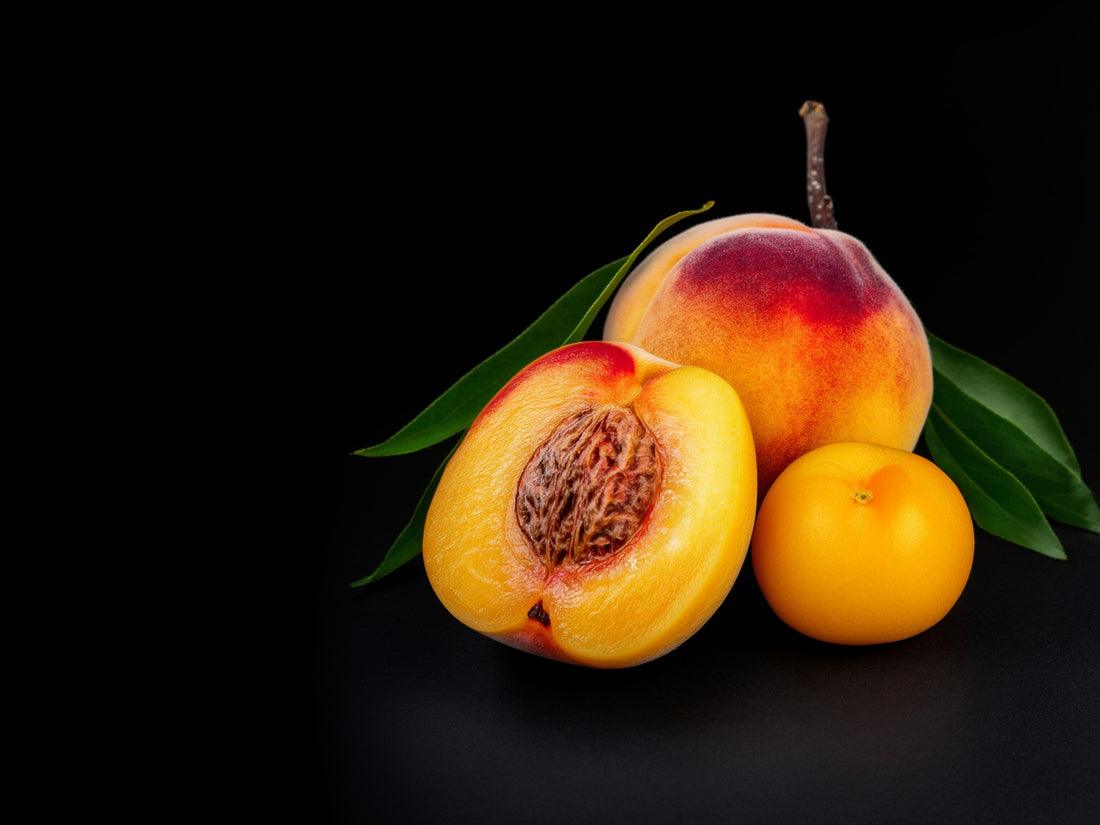
Peach and apricot
Prunus persica and Prunus armeniaca · lactone accord
The peach was domesticated in China, in the lower Yangtze valley, at least 7,500 years ago. In perfumery its note comes from lactones: the most famous is gamma-undecalactone, called “aldehyde C-14” although it is a lactone, with a scent of peach and apricot. In the real fruits, however, the leading roles go to gamma-decalactone and beta-damascenone: in apricot, gamma-undecalactone counts for very little.
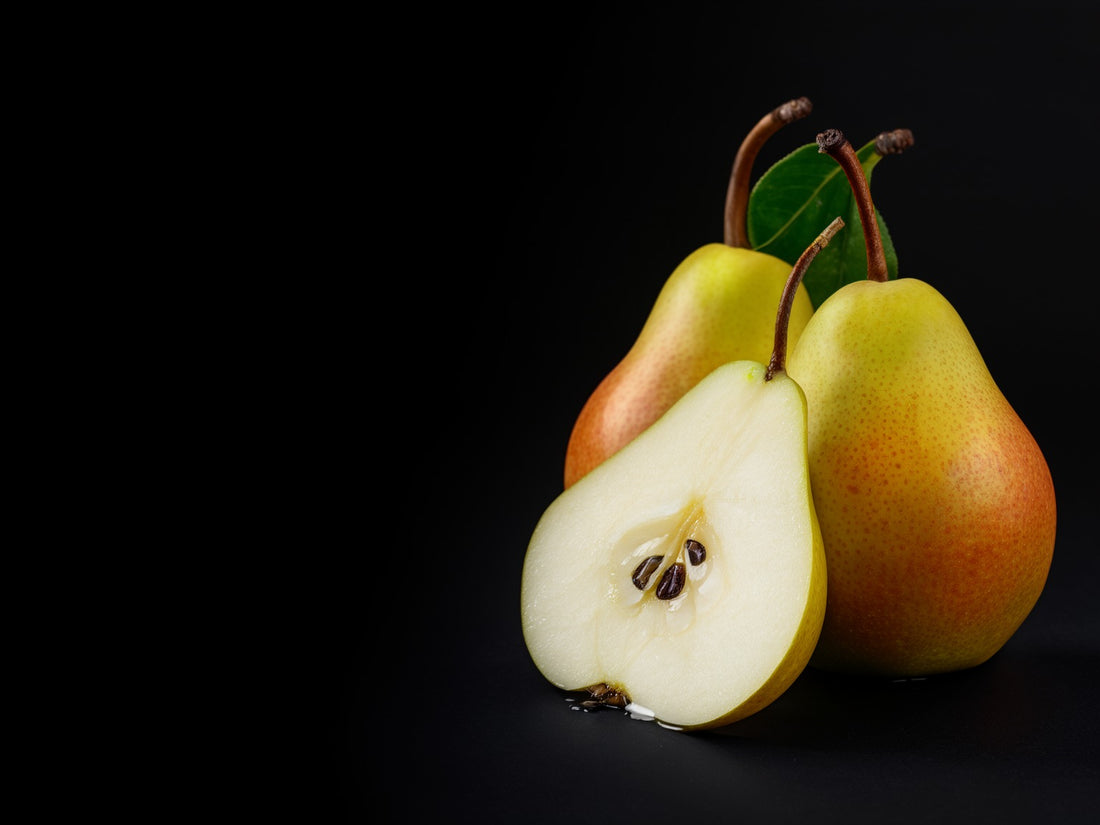
Pear
Pyrus communis · accord of molecules
Its signature molecule is ethyl decadienoate, one of the two “pear esters”: it is the compound that characterises the aroma of the Williams pear, and it increases as the fruit ripens, together with the sense of sweetness and juiciness. Alongside it is hexyl acetate, green and fruity. Precisely because of its high levels of pear esters, the Williams is the favourite for pear brandy.
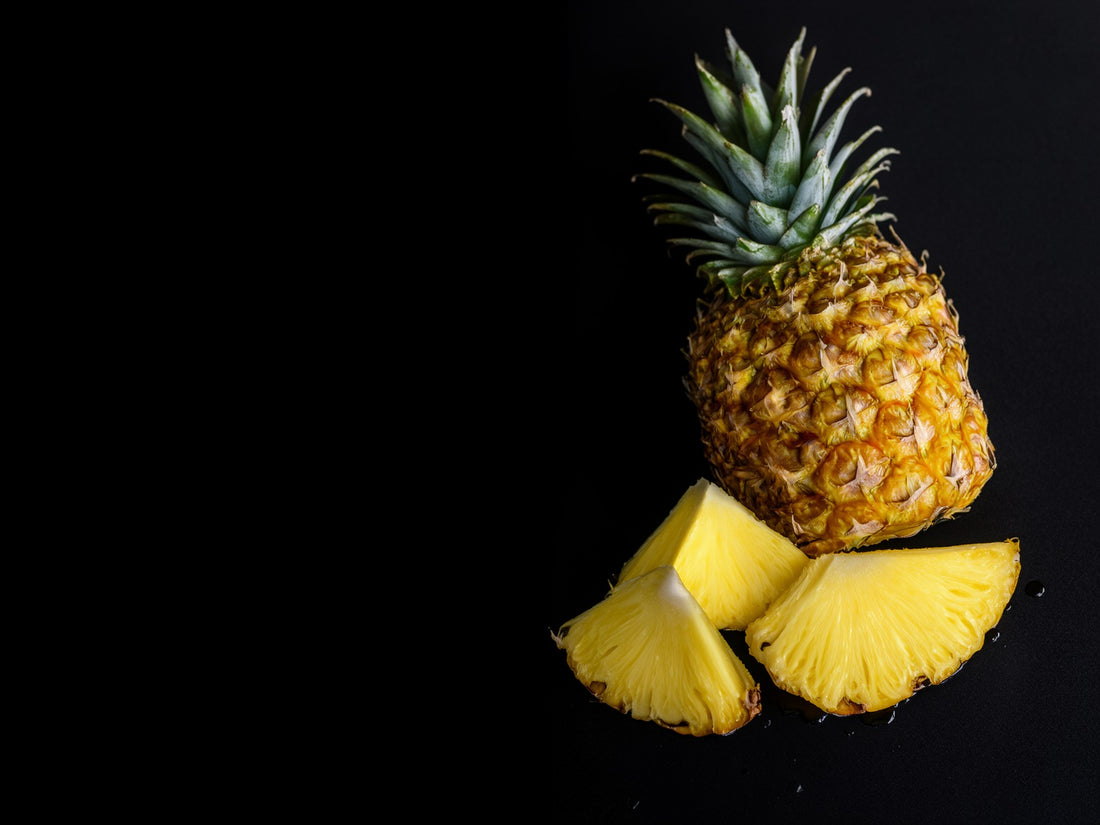
Pineapple
Ananas comosus · tropical South America
The fruit is formed from the flowers and their bracts, which become fleshy and fuse together. In fresh pineapple two molecules give it its character: furaneol, sweet and caramel-like, identified in pineapple itself in 1965, and ethyl 2-methylbutanoate. In perfumery the note is also built with allyl esters.
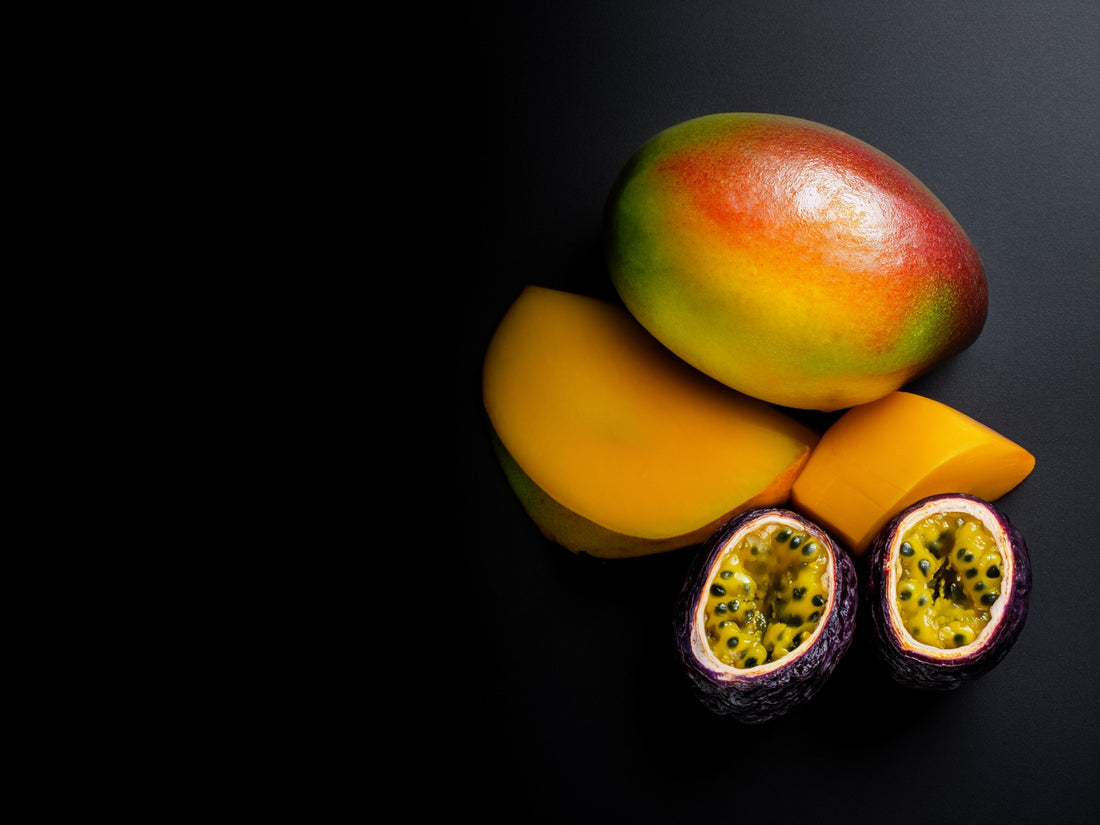
Mango and passion fruit
Mangifera indica and Passiflora edulis · India and South America
Mango, usually recreated as an accord, owes its aroma to terpenes, lactones and esters: lactones and furanones form as it ripens, and the profile varies greatly from one variety to another. In passion fruit, researchers identified 3-mercaptohexanol and its esters, sulphur molecules with a powerful scent. One of them, 3-mercaptohexyl acetate, with its passion-fruit scent, is also one of the signature molecules of Sauvignon blanc, where it can be perceived at just a few nanograms per litre.

Cherry
Prunus avium and Prunus cerasus · accord of molecules
In perfumery cherry is almost always an accord, built around benzaldehyde, which smells of bitter almond and cherry, supported by heliotropin, anisic aldehyde and vanilla notes. Natural benzaldehyde can also be obtained from cassia oil.

Fig
Ficus carica · accord and fig leaf absolute
It may be the first plant ever domesticated: figs about 11,400 years old, found in the Jordan Valley, predate wheat and barley by around a thousand years. Perfumery uses fig leaf absolute, green with a creamy base; today the fig note is above all an accord: Givaudan's Stemone, with its effect of freshly snapped green stems, brings the fig-leaf note, together with creamy lactones and woods.

Lychee
Litchi chinensis · southern China
Lychee and Gewürztraminer wine share several odour-active molecules, and the most important is cis-rose oxide: a rose molecule, perceptible at just 0.5 parts per billion, which explains why lychee smells of rose. In China it was domesticated at least twice, independently, in Yunnan and on the island of Hainan.

Plum
Prunus domestica · European plum
Among the molecules with plum nuances is damascenone, discovered in Bulgarian rose essence. With peach, apricot and coconut, plum is one of the lactonic fruits, the ones that stay longest on the skin.

Coconut
Cocos nucifera · Pacific and southern India
The coconut was brought into cultivation twice, independently: in the Pacific basin and in southern India. Coconut water is the liquid endosperm of the young fruit: as it ripens it solidifies and becomes the white flesh. Monoï de Tahiti has had an appellation of origin since 1992: it is refined coconut oil in which tiaré flowers, picked in bud, are macerated, at least 10 per litre for at least 10 days, and it can only be made in French Polynesia.
The nuances of fruity perfumes
In Michael Edwards' Fragrance Wheel, fruity sits in the Fresh sector, alongside citrus, water and green. From there it blends with the other families and takes on many faces, from the freshest to the warmest:
← FreshAmber →
Juicy fruits
Apple, pear and lychee: the crispest, most watery notes, the ones that sparkle in the opening.
Tropical fruits
Pineapple, mango, passion fruit and coconut: the sunny, exotic side of fruity.
Fruity floral
Fruit meets a heart of flowers such as rose, peony and jasmine.
Red fruits and berries
Raspberry, strawberry, cherry, blackcurrant and blackberry: the liveliest, most colourful side of fruity.
Stone fruits and fruity chypre
Peach, apricot and plum, velvety and lactonic, often over a chypre structure: the line of the great classics.
Fruity gourmand
Red berries meet vanilla and caramel: fruity turns gourmand and enveloping.
People also speak of aquatic fruity perfumes, with melon and watermelon, and of green and woody fruity perfumes, such as those built around fig. You will find many of these nuances in our collection: to explore them, use the fragrance family or note filters.
When to wear a fruity perfume
Fruity is above all the perfume of spring and summer: juicy fruits, tropical fruits and fruity florals are perfect companions for sunny days. But fruity does not stop at summer: dark fruits such as plum and cherry, fruity chypres and fruity gourmands, deeper and more enveloping, are ideal in autumn and winter too.
Longevity depends on the fruit and on the base. The freshest fruits, such as apple, pear and many berries, shine above all in the opening; lactonic fruits such as peach, apricot, plum and coconut, and gourmand or chypre bases, stay with the skin for a long time. In our collection of fruity perfumes the most frequent base notes are vanilla, musk and amber; the fruits most often found in the opening are pineapple, blackcurrant and mango.
Frequently asked questions
What does “fruity perfume” mean?
It is a perfume in which fruit, citrus aside, takes centre stage in the top or heart notes, often alongside flowers and musks. Since fruit flesh yields very little on extraction, fruity notes are recreated with molecules and accords; the great natural exception is blackcurrant bud absolute.
What is the difference between fruity and citrus?
Citrus forms a family of its own: its scent comes from pressing the peel. Fruity perfumes, instead, tell the story of the flesh of fruits such as peach, red berries, apple, pineapple and mango. In Michael Edwards' Fragrance Wheel they are two separate sub-families, both in the Fresh sector.
Are fruity perfumes for women?
Not only. Fruity was long associated with femininity, but today it has also made its mark in men's perfumery, and many niche fruity perfumes are made for everyone. The best way to choose is to try them on your skin.
Do fruity perfumes fade quickly?
It depends on the fruit and on the base. The freshest notes, such as apple and pear, shine above all in the opening, while peach, apricot, plum and coconut last longer. Many niche fruity perfumes rest on long-lasting bases: in our collection the most frequent are vanilla, musk and amber.
When should you wear a fruity perfume?
Above all in spring and summer. Dark fruits, fruity chypres and fruity gourmands, deeper and more enveloping, are perfect in autumn and winter too.
Can I try a fruity perfume before buying it?
Yes. With every order over €100 you receive 10 free samples, and you choose 5 of them yourself: it is the easiest way to discover a fruity perfume on your skin before buying the bottle. If you are near Rome, you can try them in person at our boutique in Nettuno.
Found your fruity perfume?
Choose from the 137 fruity perfumes in our boutique, signed by the finest international niche houses.
- 10 free samples with every order over €100, you choose 5 of them
- Free shipping in Italy on orders over €60
- Boutique in Nettuno, near Rome, to try them in person
Explore the other fragrance families
-
 Floral perfumes233 perfumes
-
 Citrus perfumes73 perfumes
-
 Aromatic perfumes76 perfumes
-
 Woody perfumes222 perfumes
-
 Amber perfumes211 perfumes
-
 Gourmand perfumes135 perfumes
-
 Spicy perfumes135 perfumes
-
 Leather perfumes38 perfumes
-
 Chypre perfumes9 perfumes
-
 Aquatic perfumes38 perfumes
-
 Musky perfumes36 perfumes
-
 Powdery and talc-like perfumes17 perfumes


