


Aromatic perfumes
Fresh, herbal, luminous: aromatic perfumes are born from herbs. Lavender, the queen of the family, meets clary sage, camphorous rosemary and juniper berries, alongside mint, basil and mate. This is also where fougère was born, the great historic accord of lavender, coumarin and oakmoss that opened the era of modern perfumery. Lively and light in spring and summer, warmer and deeper when they rest on woods and amber, they are all waiting to be discovered on your skin. Here you will find aromatic perfumes from the finest international niche brands.
The 10 best niche aromatic perfumes
Our top 10: the most loved aromatic perfumes in our boutique.
-
N. 1
 Initio Parfums Privés
Paragon
Aromatic woody: bergamot, white sage and lavender over plum, palo santo and black pepper, sandalwood and oud. €290,00 -
N. 2
 Essential Parfums
Bois Impérial
Aromatic woody: Thai basil and Nepalese Timut pepper over Haitian vetiver and Georgywood, Akigalawood, Indonesian patchouli and Ambrofix. From €24,00 -
N. 3
 Initio Parfums Privés
Oud For Greatness Neo
Woody aromatic: bergamot over Orpur® lavender, saffron and fir balsam, oud and musk. €320,00 -
N. 4
 Agatho
195 A.C.
Woody aromatic: fig leaf, mint and pomegranate over fig, cardamom and jasmine, black tea, incense and oud. From €55,00 -
N. 5
 Liquides Imaginaires
Sancti
Amber aromatic: bergamot, mandarin and cypress over fir balsam, lavender and rosemary, incense, myrrh and benzoin. €210,00 -
N. 6
 Thameen London
Bohemian Infusion
Aromatic citrus: grapefruit, petitgrain and blackcurrant over artemisia, cinnamon and myrtle, labdanum and patchouli. €290,00 -
N. 7
 Superz. Budapest
Smesh
Spicy aromatic: blood orange, cinnamon and black pepper over lavender and bitter orange, tonka bean, vanilla and amber. €140,00 -
N. 8
 Unique'e Luxury
Akdeniz
Aromatic marine: marine notes, lemon and pineapple over lavandin and thyme, patchouli, cedarwood and amber. €279,00 -
N. 9
 Agatho
Fauno
Woody aromatic: artemisia, tobacco leaves and grapefruit over pimento, juniper berries and clary sage, olibanum, suede and cedarwood. From €55,00 -
N. 10
 Lorenzo Pazzaglia
Esco Pazzo
Spicy aromatic: citrus, pepper and artemisia over saffron, geranium and mate, tobacco, leather and ambergris. €145,00


All aromatic perfumes
14 of 76 perfumes with the selected filters.
14 of 76 products
-
VERDE RESPIRO
Vendor:Giardini di ToscanaRegular price €140,00Regular priceUnit price for -
BOLD AS LOVE
Vendor:Thameen LondonRegular price €290,00Regular priceUnit price for -
MON VETIVER
Vendor:Essential ParfumsRegular price From €24,00Regular priceUnit price for -
ESCO PAZZO
Vendor:Lorenzo PazzagliaRegular price €145,00Regular priceUnit price for


A guide to aromatic perfumes
What is an aromatic perfume?
“Aromatic” means having the nature, smell and taste of an aroma. In perfumery it is the family built on aromatic herbs, fresh or dried: lavender, rosemary, sage, thyme, basil, tarragon, mint and geranium. Many of these plants, such as lavender, sage, rosemary, thyme, mint and basil, belong to the same botanical family, the mint family, and produce fragrant substances rich in terpenes. It is a family with a clear, bright character that gives a perfume freshness, cleanness and elegance.
Many herb oils are obtained by steam distillation of the flowering tops: this is how aromatic, floral French fine lavender oil and aromatic, camphorous, resinous rosemary oil are made. Lavender also gives an absolute, extracted with a volatile solvent: warmer, sweeter and more hay-like than the essential oil.
What is fougère?
“Fougère” is French for “fern”, but the name does not describe the smell of the plant: fougère is an accord invented by perfumers. Its pillars are bergamot, lavender, geranium, oakmoss and coumarin or tonka bean; coumarin is the molecule with a sweet scent of hay. The name comes from the first perfume of the family, created in 1882 by Paul Parquet, and lavender is one of its traditional ingredients.
In the 20th century fougère became the men's style par excellence, tied to the ritual of shaving and to the idea of cleanness. In the French classification it is a family of its own, and in Michael Edwards' fragrance wheel it long sat at the centre. Many classifications now place it within the aromatic family, as one of its subfamilies.
Aromatic, fougère or fresh aromatic?
Three words you will come across often: here is what sets them apart.
Aromatic
The great family
- What it isThe family of perfumes built on aromatic herbs
- ScentHerbaceous and bright: lavender, rosemary, sage, thyme, basil, mint
- In perfumesHerb oils, steam-distilled, give lift to the opening and character to the heart
Fougère
The historic accord
- What it isA constructed accord, not the smell of fern
- ScentLavender, bergamot and geranium over oakmoss and sweet, hay-like coumarin
- In perfumesBorn in 1882, it gave rise to a whole style: from aromatic fougère to amber fougère
Fresh aromatic
The lightest face
- What it isThe freshest, most transparent side of aromatic perfumes
- ScentMint, basil, green tea and citrus, all the way to marine notes
- In perfumesThe ideal companion for spring and summer
In short, for many of today's classifications every fougère is an aromatic, but not every aromatic is a fougère: it is precisely this variety that makes the family so rich.
From coumarin to today's fougères
Aromatic perfumes are the family in which modern perfumery took its first steps: a synthetic molecule, coumarin, gave birth to fougère, and from there came some of the best-loved perfumes of the 20th century. The main milestones:
- 1868William Henry Perkin synthesises coumarin for the first time, the molecule with a sweet scent of hay.
- 1882Fougère Royale by Houbigant, created by Paul Parquet: the first fougère, which gives its name to the whole family. It was among the first perfumes to use coumarin, synthesised a few years earlier, and is considered one of the first modern perfumes.
- 1889Jicky by Guerlain, created by Aimé Guerlain with the molecules vanillin and coumarin: the house describes its fougère accord of bergamot, lavender and rosemary.
- 1973Paco Rabanne pour Homme, created by Jean Martel: the house presents it as a pioneer of aromatic fougères, with lavender and tarragon, geranium and clove, woods and a tobacco-honey accord.
- 1981With the decree of 14 December, Haute-Provence lavender essential oil is granted its controlled designation of origin.
- 1981Kouros by Yves Saint Laurent, created by Pierre Bourdon, the nose who a few years later would also create Cool Water.
- 1982Drakkar Noir by Guy Laroche, created by Pierre Wargnye: an aromatic fougère.
- 1984The first “Classification des parfums” is published, based on the work of the Technical Commission of the Société Française des Parfumeurs: the French classification in which fougère is, to this day, a family of its own.
- 1988Cool Water by Davidoff, created by Pierre Bourdon: a fresh aromatic with mint, marine and green notes, geranium, cedar and oakmoss.
- 2010Michael Edwards revises his fragrance wheel: fougère, which until then had sat at its centre, is merged into the new Aromatic subfamily. That same year Fougère Royale returns, reworked by perfumer Rodrigo Flores-Roux.
Today niche perfumery takes aromatic herbs in every direction: fresh, green, woody, spicy and amber.
The raw materials of aromatic perfumes

Lavender
Lavandula angustifolia · Haute-Provence and Bulgaria
This is fine lavender, or true lavender, the queen of aromatic perfumes. In Haute-Provence its essential oil has a PDO, recognised as an AOC in 1981: the specification requires plants grown from local seed, normally cultivated at an altitude of at least 800 metres. According to dsm-firmenich, France is one of the main producers of fine-fragrance-quality lavender. Lavandin is a different plant: a sterile hybrid of true lavender and spike lavender, richer in camphor, with a sharper, more camphorous scent.
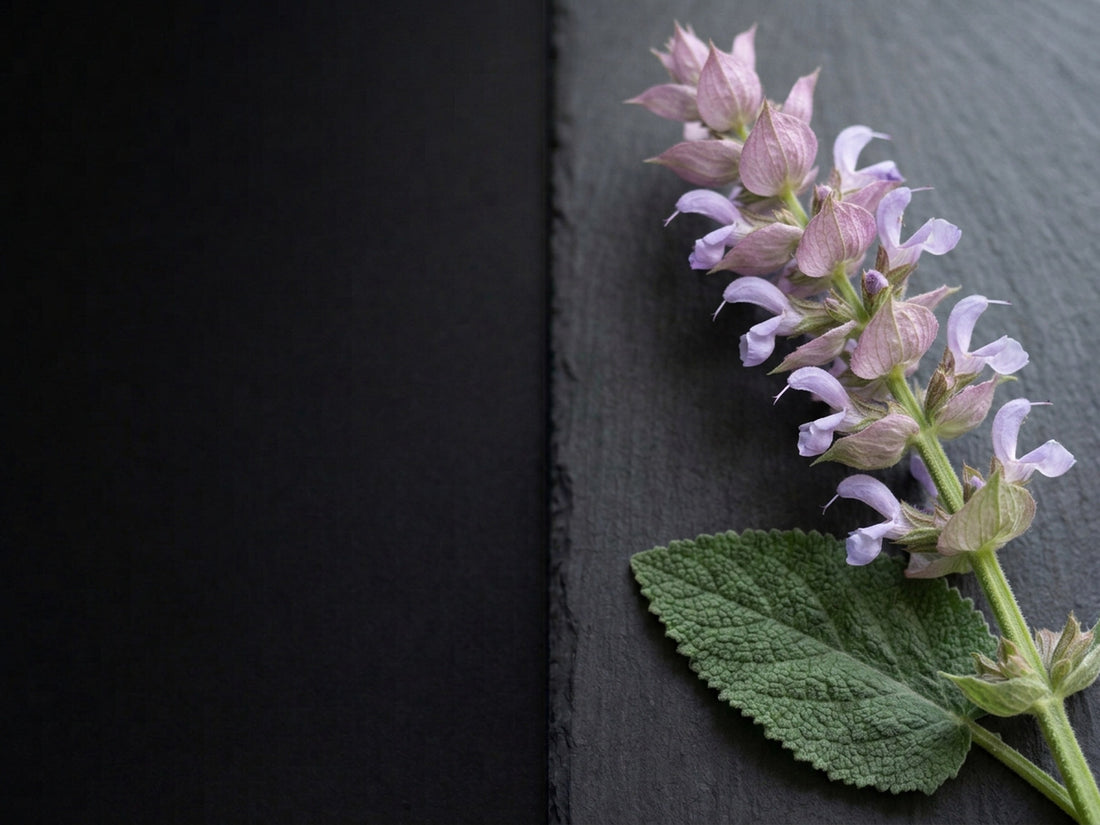
Clary sage
Salvia sclarea · France, Ukraine and China
The aerial part is used: its steam-distilled essential oil is dominated by linalyl acetate and linalool, the same main molecules as lavender. The concrete is very rich in sclareol, which forms mainly in the flower calyces: it is the natural molecule from which, in the 1950s, Ambrox was made by semi-synthesis, the amber ingredient that took the place of ambergris. It should not be confused with common sage, which is dominated instead by thujone and camphor.

Rosemary
Salvia rosmarinus · Tunisia, Morocco and Spain
Botanically, it is now a sage: a DNA study published in 2017 merged the genus Rosmarinus into Salvia, and the Royal Horticultural Society adopted the new name in 2019. Twigs and flowering tops are steam-distilled, and the ISO standard recognises two types: the Tunisia and Morocco type, rich in 1,8-cineole, and the Spanish type, rich in α-pinene, camphor and cineole. There is also a verbenone chemotype: every rosemary has its own signature.

Juniper
Juniperus communis · Balkans and Adriatic
Its “berries” are actually small cones, called galbuli: they ripen only in their second year, so unripe and ripe cones grow side by side on the same plant. The ripe berries are steam-distilled, and the oil, dominated by α-pinene followed by myrcene, sabinene and limonene, has the classic notes that instantly recall gin.

Cypress
Cupressus sempervirens · France and Spain
This is the Mediterranean cypress, native to the eastern Mediterranean and now at home throughout the Mediterranean basin. Its twigs give an essential oil with a fresh, woody scent, dominated by α-pinene and δ-3-carene. This character makes it an ideal ingredient in fougères and woody perfumes.

Artemisia and davana
Artemisia herba-alba and Artemisia pallens · Morocco and southern India
According to Biolandes, armoise, or white wormwood, is harvested in Morocco's High Atlas under a state concession: during the season, villagers camp out in the desert for the harvest. Its oil, fresh and camphorous, is perfect in fougères and colognes. Davana, another artemisia, comes from southern India: it is cut by hand in full bloom and gives a fruity, liqueur-like scent. In Tamil it is called Davanam and is woven into garlands for temples dedicated to Shiva.

Mate
Ilex paraguariensis · Brazil, Argentina and Paraguay
The dried leaves of the mate plant are used, traditionally dried with smoke. Volatile solvents give an absolute with green tea notes that turn to tobacco, with hay-like facets. Once gathered only from wild plants, it is now grown on a large scale in southern Brazil and Argentina. Its absolute is tenacious and pairs beautifully with cedar and fresh colognes.

Mint
Mentha × piperita and Mentha spicata
Perfumery uses two mints, both steam-distilled. In peppermint oil the main component is menthol, followed by menthone. Spearmint is distilled from the flowering tops and is dominated instead by carvone.

Basil
Ocimum basilicum · India and Vietnam
Native to southern Asia, it belongs, like lavender, sage and rosemary, to the mint family. Leaves and flowering tops are steam-distilled, and raw material houses offer two types: methyl chavicol basil, green and aniseed-like, close to tarragon, and linalool basil. In the methyl chavicol type, distilled in India and Vietnam, estragole is the main component.
The nuances of aromatic perfumes
From the freshest herbs to the warmest fougères, here are the family's main faces:
← FreshWarm →
Fresh aromatic
Mint, basil, green tea and citrus, all the way to marine notes: the lightest, brightest face of the aromatic family.
Green aromatic
Basil, cut grass and violet: a lively aromatic that smells of freshly picked nature.
Aromatic fougère
The accord of lavender, geranium, coumarin and oakmoss, enriched with herbs, spices or woods: the classic heart of the family.
Woody aromatic
Dried herbs rest on cedar, vetiver or patchouli: a dry, elegant aromatic.
Spicy aromatic
Thyme, cardamom, black pepper and ginger: the herbs gain warmth and character.
Amber fougère
The warmest, sweetest side of fougère, the closest to gourmand: soft and enveloping.
In our collection the most frequent second families are woody, citrus and marine: to explore every nuance, use the fragrance family or note filters.
When to wear an aromatic perfume
Fresh aromatic perfumes, with mint, basil, rosemary and green herbs, are perfect in spring and summer. In woody ones, dried herbs rest on cedar, vetiver or patchouli, while amber fougères turn warm and sweet: to find your moment, the best way is to try them on your skin.
Longevity depends above all on the base the herbs rest on: woods, musks, amber and coumarin give the perfume body and staying power. In our collection the most frequent base notes are patchouli, musk and amber; in the heart lavender leads, followed by clary sage.
Frequently asked questions
What does “aromatic perfume” mean?
It is a perfume built on aromatic herbs, such as lavender, rosemary, sage, thyme, basil and mint, whose oils are obtained by steam distillation. It is the family of herbal freshness, with a clear, bright character.
What is a fougère perfume?
It is a perfume built on an invented accord, not on the smell of fern: bergamot, lavender, geranium, oakmoss and coumarin, or tonka bean. The name comes from Houbigant's Fougère Royale, the first perfume of the family, born in 1882.
What is the difference between aromatic and fougère?
Aromatic is the broader family, the family of herbs; fougère is a precise accord born within it. Many classifications now place fougère within the aromatic family: that is why every fougère is an aromatic, but not every aromatic is a fougère.
Are aromatic perfumes for men?
Not only. Over its history fougère was above all a style of men's perfumery, as the timeline above shows. The best way to choose, though, is simple: try them on your skin and let the herbs speak.
When should I wear an aromatic perfume?
Fresh aromatic perfumes, with mint, basil and green herbs, are perfect in spring and summer. For the warmer woody, spicy and amber versions, the best advice is to try them on your skin and choose the moment that feels most like you.
Can I try an aromatic perfume before buying it?
Yes. With every order over €100 you receive 10 free samples, and you choose 5 of them yourself: it is the easiest way to discover an aromatic perfume on your skin before buying the bottle. If you are near Rome, you can try them in person at our boutique in Nettuno.
Found your aromatic perfume?
Choose from the 76 aromatic perfumes in our boutique, signed by the finest international niche houses.
- 10 free samples with every order over €100, you choose 5 of them
- Free shipping in Italy on orders over €60
- Boutique in Nettuno, near Rome, to try them in person
Explore the other fragrance families
-
 Floral perfumes233 perfumes
-
 Fruity perfumes137 perfumes
-
 Citrus perfumes73 perfumes
-
 Woody perfumes222 perfumes
-
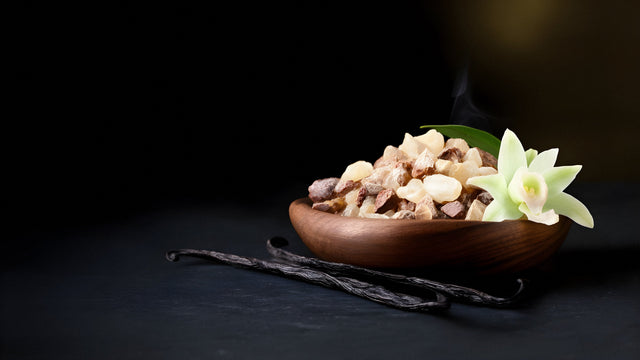 Amber perfumes211 perfumes
-
 Gourmand perfumes135 perfumes
-
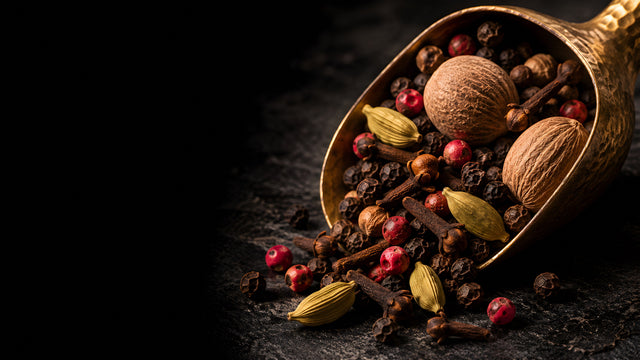 Spicy perfumes135 perfumes
-
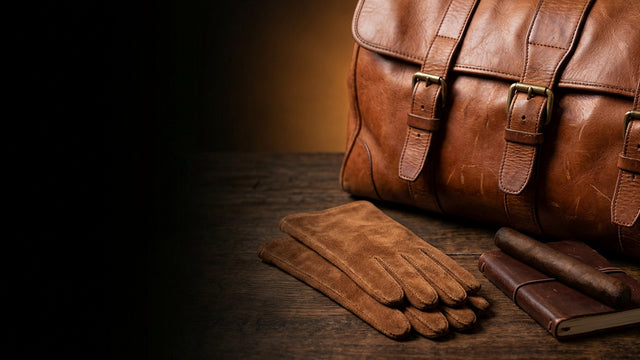 Leather perfumes38 perfumes
-
 Chypre perfumes9 perfumes
-
 Aquatic perfumes38 perfumes
-
 Musky perfumes36 perfumes
-
 Powdery and talc-like perfumes17 perfumes


